
Titanium vs Platinum Rings NZ: Honest Comparison Guide

Choosing between titanium and platinum is one of the bigger decisions you’ll make when buying a men’s ring in New Zealand. The two metals sit at opposite ends of the spectrum: titanium is light, modern and budget-friendly; platinum is dense, traditional and a serious investment. Both are legitimate choices, but they suit different hands, lifestyles and wallets. This guide walks through the practical differences for Kiwi buyers — durability, NZD pricing, finish, comfort and long-term care — so you can decide which one actually fits your day-to-day.
Quick Summary
- Durability: Titanium resists scratches and dents far better than platinum. Platinum is durable too, but it scratches more readily and develops a soft patina over time.
- Weight: Titanium is roughly four times lighter than platinum. Platinum has a noticeable heft on the finger.
- Cost in NZD: Titanium rings typically run from a couple of hundred dollars; platinum rings usually start well into four figures.
- Finish: Titanium takes brushed, matte, polished and black finishes. Platinum is naturally white and stays that way for decades.
- Maintenance: Titanium is essentially fit-and-forget. Platinum benefits from occasional professional polishing.
- Best for: Titanium suits active hands, tradies, gym-goers and anyone wanting modern looks at a fair price. Platinum suits those wanting a heritage metal for a wedding or engagement piece.
Durability and Everyday Wear
For most Kiwi blokes the deciding factor isn’t shine — it’s whether the ring will survive work, the gym, the garden and a weekend on the boat. This is where the two metals behave very differently.
Titanium
Titanium has one of the best strength-to-weight ratios of any metal used in jewellery. It resists bending, cracking and scratching, and it doesn’t tarnish or react with sweat, chlorinated pool water or salty Hauraki Gulf air. If you work with your hands — building, farming, mechanic work, hospitality — titanium is the metal that tends to come out the other side looking the same. Our full range of titanium rings is built around that brief.
Platinum
Platinum is genuinely durable, but it behaves differently. The metal is so dense that it doesn’t wear away when scratched — it displaces. Marks on the surface push the metal sideways rather than removing it, which is why platinum rings hold gemstones so securely for decades. The trade-off is that the surface picks up fine scratches more readily than titanium, gradually softening into a matte patina. Some people love that aged look; others prefer to have it re-polished every couple of years. You can browse our platinum men’s rings to see how the finish settles.
Weight and Comfort
Pick up a titanium ring and a platinum ring of the same size and the difference is immediate. Titanium feels almost weightless — useful if you’ve never worn a ring before, or if you spend long days with tools in hand. Platinum sits heavy. For wedding rings in particular, that weight is part of the appeal: it reminds you it’s there. Neither is objectively better; it’s a preference question worth testing in person if you can.
Comfort-fit interiors (a slight dome on the inside of the band) are standard across both metals at MRO and make a bigger difference to comfort than the metal itself, especially for wider bands.
Cost in New Zealand Dollars
This is usually the deciding factor. Platinum is one of the rarer metals on earth, and it’s harder to work with than gold or titanium, so labour costs are higher too. In NZD, a plain platinum wedding band typically lands somewhere between $1,800 and $3,500, depending on width, weight and any stones. Designer platinum pieces climb well past that.
Titanium starts much lower — often $200 to $600 for a quality band, with inlaid or feature designs sitting around $400 to $900. All MRO NZ prices are GST-inclusive and include free delivery across New Zealand, including rural addresses. There are no hidden customs charges either, since stock ships from within the region rather than from overseas.
If you want to see the full price spread side by side, the men’s wedding rings category is the easiest place to compare.
Appearance and Finish Options
Platinum
Platinum has a naturally cool white colour that doesn’t need plating to maintain. Unlike white gold, it won’t yellow over time or need re-rhodium every few years. The look is restrained and classical — it’s why it remains the default for high-end engagement and wedding rings. Most platinum bands come polished, but brushed and hammered finishes are available if you want something a bit less formal.
Titanium
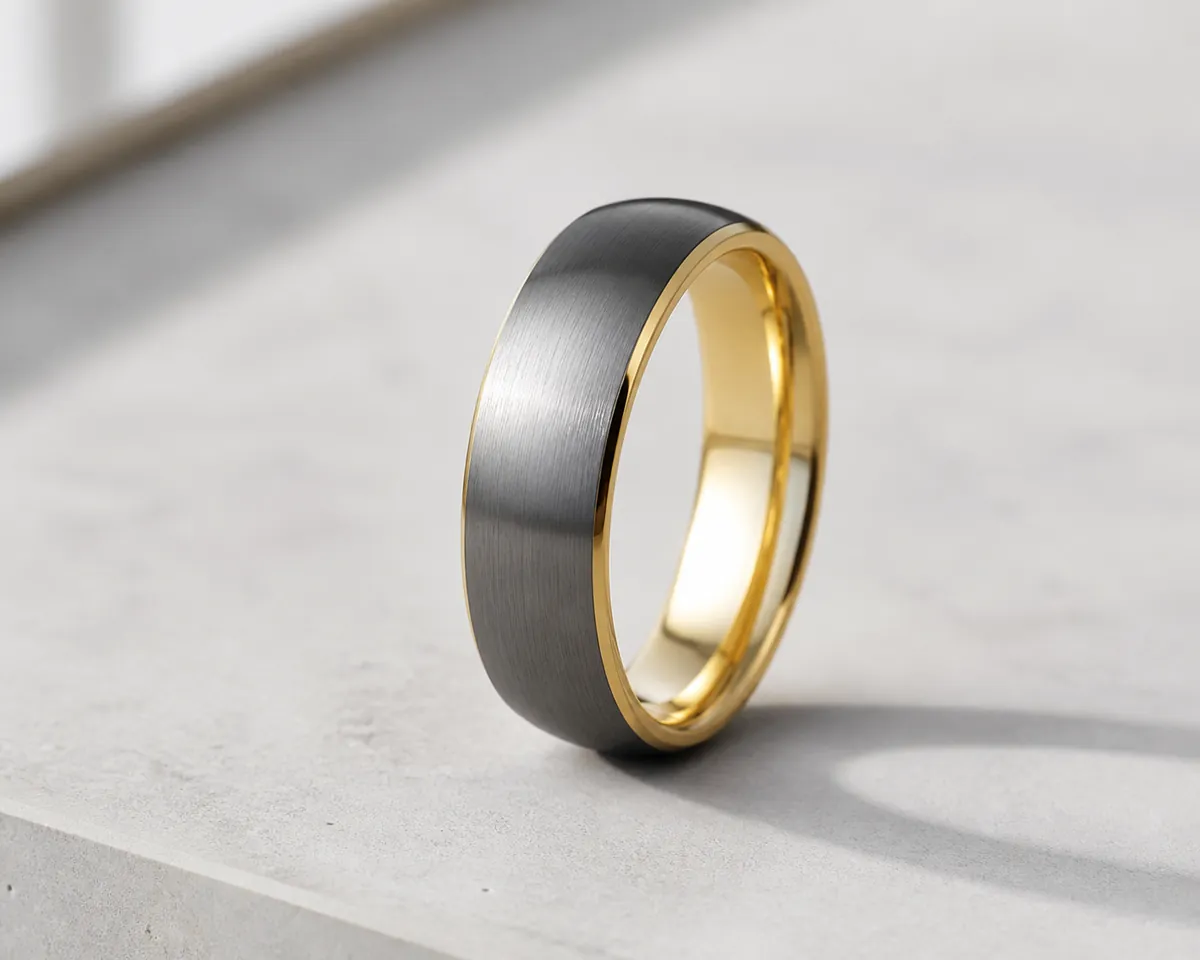
Titanium is far more versatile visually. The same base metal can be finished as a high-polish mirror, a satin brush, a matte sandblast or a deep black through anodising or PVD coating. It also accepts inlays beautifully — wood, carbon fibre, meteorite, ceramic and precious metals all set cleanly into titanium. If you want something that doesn’t look like every other wedding band, titanium gives you the most room to move. Have a look at how this plays out in the carbon fibre rings range, where titanium is used as the structural shell.
Maintenance and Care
NZ’s climate is generally kind to jewellery, but coastal humidity (Auckland, Tauranga, Wellington’s south coast) and chlorinated pool water are the two things worth thinking about.
Titanium
Effectively zero maintenance. Warm water, a drop of dishwashing liquid and a soft brush once a month is all it needs. Titanium won’t tarnish, won’t react with skin, and won’t be affected by salt water or chlorine. If a polished titanium ring picks up scratches over the years, a jeweller can refinish it for a small fee, but most owners simply leave it and let it wear naturally.
Platinum
Platinum is harder work. The metal itself doesn’t degrade, but the surface scratches and softens. A professional polish every two to five years restores the original sheen. At home, the same warm-soapy-water routine applies. Avoid wearing platinum during heavy lifting or rough manual work if you want it to stay bright — the marks won’t damage the ring, but they will accumulate.
Resizing and Repair
This is the one area where platinum has a clear advantage. Platinum can be resized, welded and re-shanked by any decent jeweller. Titanium is much harder. Most titanium rings can be sized up by half a size with internal stretching, but they generally can’t be sized down or cut and re-soldered. The workaround is to get the size right the first time. The NZ ring size guide walks through measuring at home — and because NZ uses the same A-Z alphabetical sizing as Australia and the UK, any size you’ve been quoted by a local jeweller will translate directly.
Which Suits Which Lifestyle
Titanium suits you if:
- You work with your hands or in a trade.
- You’re at the gym, on a bike or in the water often.
- You’d rather spend $400 on a ring you’ll never think about than $3,000 on one you have to look after.
- You want a modern look — black, brushed, inlaid or coloured.
- You’ve never worn a ring and want something you barely feel.
Platinum suits you if:
- You want a heritage metal for a wedding or engagement ring.
- You like the weight and want to feel the ring on your hand.
- You’re setting diamonds or coloured stones and want the most secure long-term mount.
- You’re comfortable budgeting four figures and don’t mind occasional polishing.
- You want a ring that’ll look the same in 40 years as it did on day one (with a soft patina, or freshly polished — your choice).
Other Materials Worth Knowing About
Titanium and platinum aren’t the only two contenders. A few alternatives often come up when Kiwi buyers are weighing options:
- Tungsten: Even harder than titanium, with a heavier feel closer to platinum. Scratch-resistant to the point of being almost indestructible, though it can shatter under heavy impact. A common alternative when someone likes the weight of platinum but not the price.
- Gold: Yellow, white or rose. Softer than titanium but with the heritage value of platinum at a lower price point. White gold needs re-plating every few years; yellow and rose gold don’t.
- Silicone: Not a metal, but worth mentioning. A growing number of guys wear a silicone ring at work or the gym and switch back to their titanium or platinum band afterwards. Cheap, safe around machinery, and breaks under serious load rather than crushing a finger.
If you want to see everything in one place before narrowing down, the full men’s rings range is the best starting point.
The Bottom Line
Titanium and platinum aren’t really competing for the same buyer. Titanium is the practical, modern, hard-wearing choice for everyday life in NZ — light on the hand, light on the wallet, and almost impossible to wreck. Platinum is the heritage option: heavier, more traditional, more expensive, and the metal you choose when you want a ring that feels like a serious commitment in itself. Most Kiwi buyers don’t regret either choice, provided it’s matched to how they actually live. If you’re still on the fence, get the sizing sorted first, then let the budget and lifestyle answer the rest.
Common questions
Are titanium rings a good choice for NZ tradies and outdoor workers?
Yes — titanium is one of the best options for trade and outdoor work in New Zealand. It doesn't bend, scratches resist well, and it won't react with sweat, salt air or chlorinated water. Most titanium rings will outlast the job site they're worn on.
How much do platinum rings cost in NZD?
Plain platinum wedding bands in New Zealand typically sit between NZD $1,800 and $3,500, depending on width and weight. Platinum rings with diamonds or designer detailing climb higher. All MRO NZ pricing is GST-inclusive with free delivery across New Zealand.
Can a titanium ring be resized in New Zealand?
Titanium can usually be sized up by about half a size through internal stretching, but it can't be cut and resoldered like gold or platinum. Because of that, it's worth getting the size right at the start. The NZ ring size guide on our site uses the same A-Z sizing as Australian and UK jewellers.
Does platinum scratch easily?
Platinum picks up surface scratches more readily than titanium or tungsten, but the metal isn't actually lost — it just displaces sideways, which is why platinum is so secure for holding gemstones. Many owners come to like the soft matte patina that develops, while others have the ring professionally polished every few years.
Do you deliver titanium and platinum rings to rural NZ addresses?
Yes. Free delivery is included on every order across New Zealand, including rural delivery to addresses outside the main centres. Most orders to Auckland, Wellington and Christchurch arrive within a couple of working days, with rural addresses typically adding one to two days.