
Can I Wear My Ring in the Pool or Ocean? A New Zealand Guide by Material

TL;DR
Whether you can wear your ring in the pool or ocean depends entirely on the material. Tungsten and titanium handle water well, while gold and silver need extra care in chlorinated or saltwater. This guide covers every ring material sold in New Zealand and gives you clear, practical answers for everyday swimmers and beach-goers.
In This Guide
- Can I Wear My Ring in the Pool or Ocean in New Zealand?
- Water Resistance by Material: The Complete Breakdown
- Chlorine vs Saltwater: Which is More Damaging?
- The NZ Outdoor Lifestyle — Rings That Keep Up
- How to Care for Your Ring After Water Exposure
- Which Ring Should You Choose for an Active Water Lifestyle?
- Frequently Asked Questions
- References & Sources
If you’re a Kiwi who swims laps, surfs the coast, or hits the bach every summer weekend, knowing whether you can wear your ring in the pool or ocean in New Zealand is essential. Short answer: it depends on the ring material. Some metals are completely impervious to water; others corrode, tarnish, or lose their finish after prolonged exposure to chlorine or salt. This guide breaks it all down by material so you can make an informed decision before your next swim.
Can I Wear My Ring in the Pool or Ocean in New Zealand?
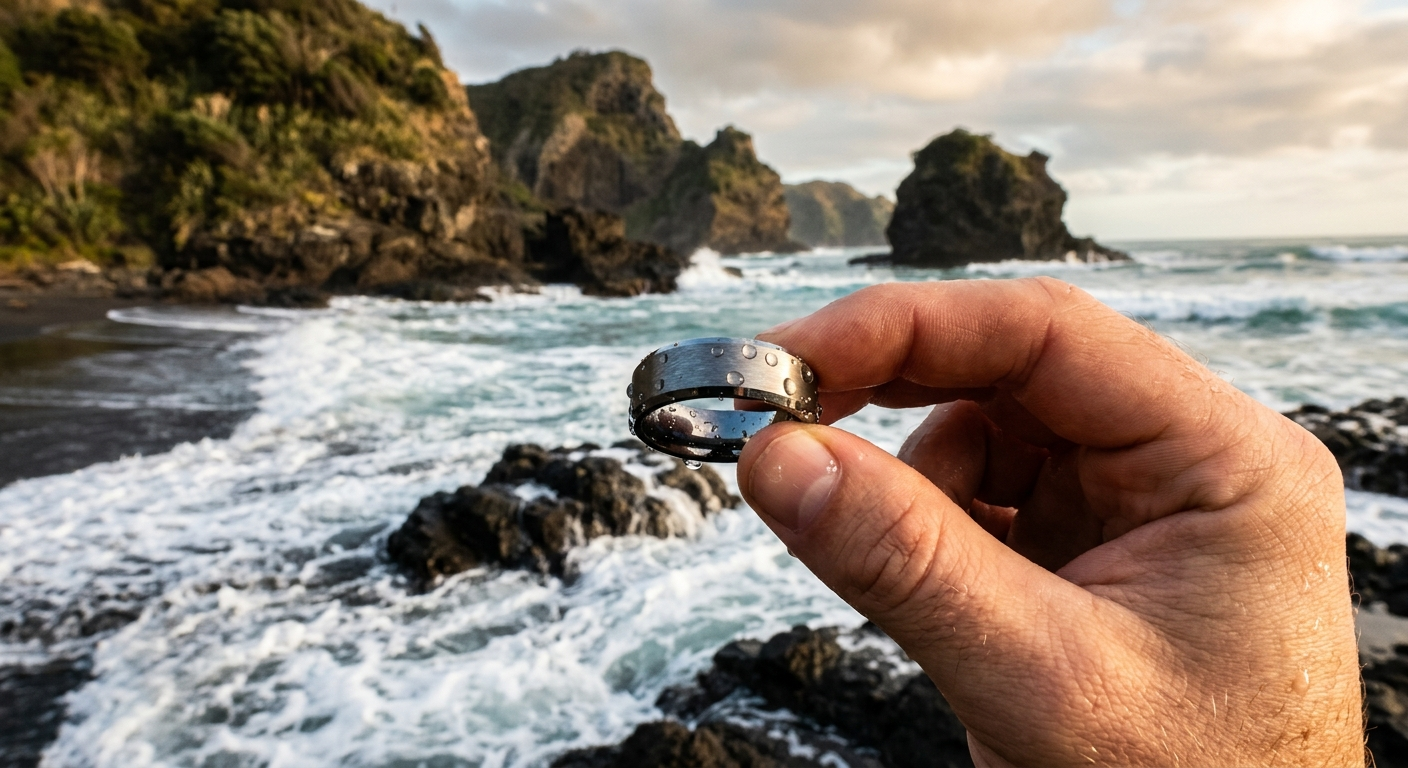
Yes, you can wear many ring types in the pool or ocean in New Zealand — but not all rings handle water equally. The material determines the risk. Hard, corrosion-resistant metals like tungsten carbide and titanium are safe for regular water exposure. Precious metals like gold and silver react to chlorine and saltwater chemicals over time. Understanding the chemistry is the key to protecting your ring.
New Zealand has one of the highest rates of recreational swimming participation in the world. According to Sport NZ’s Active NZ Survey, over 1.4 million New Zealanders swim regularly, making it the country’s most popular physical activity. That means millions of people face this question every single day — and getting the answer wrong can mean a damaged or discoloured ring.
Water Resistance by Material: The Complete Breakdown
Each ring material responds differently to pool chemicals and ocean saltwater. Here’s a material-by-material breakdown to help you decide whether you can wear your ring in the pool or ocean in New Zealand safely.
Tungsten Carbide Rings
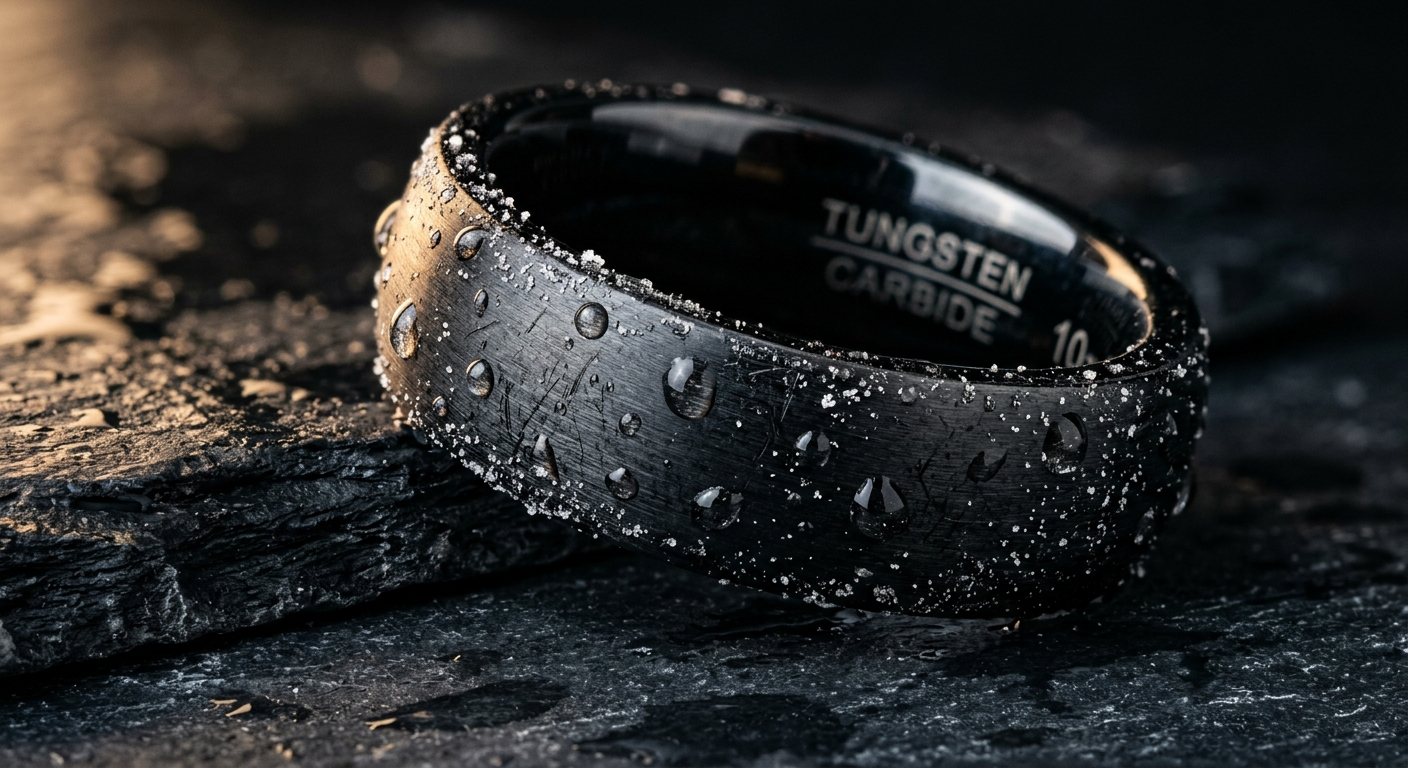
Tungsten carbide is among the most water-resistant ring materials available. It will not corrode, tarnish, or discolour from chlorine, saltwater, or freshwater. A tungsten ring can be worn in the pool or ocean without any damage to the metal itself. The only caveat is that some tungsten rings use a cobalt binder in the manufacturing process — these can occasionally show a slight reaction to pool chemicals over very long periods. Premium tungsten carbide rings use a nickel binder instead, which is fully inert.
Our tungsten rings are made from high-grade nickel-bound tungsten carbide, making them ideal for New Zealand’s outdoor, water-heavy lifestyle. They’re the number-one choice for Kiwi men who swim, surf, or work outdoors.
Titanium Rings
Titanium is biocompatible, lightweight, and highly corrosion-resistant — which is precisely why it’s used in marine engineering, surgical implants, and aerospace. A titanium ring will not rust, tarnish, or react to chlorinated pool water or ocean saltwater. It’s one of the best materials for an active New Zealand lifestyle that includes regular swimming or beach visits.
If you’re choosing between tungsten and titanium for water activities, both are excellent. Titanium is lighter on the finger; tungsten is heavier and harder. Our titanium rings are anodized and polished to retain their finish indefinitely, even with frequent water exposure.
Black Rings — Solid vs Coated: What You Need to Know
Black rings are increasingly popular, and many are as water-resistant as their base material. However, there’s an important distinction: black coated rings (where the black colour comes from an ion plating or PVD coating on a different base metal) can see the coating wear faster with regular pool or salt exposure. Rings made from inherently black materials — like black tungsten, black titanium, or solid black ceramic — do not have this issue.
Our black rings include solid black tungsten carbide and black ceramic options, both of which handle water exposure well. Always confirm whether the black finish is a coating or an inherent property of the material before purchasing for an active water lifestyle.
Ceramic Rings
Ceramic rings are made from zirconium oxide, an extremely hard and chemically inert material. Ceramic does not corrode, tarnish, or react to water in any form. It’s one of the safest ring materials for swimmers and ocean users. The only limitation is brittleness — ceramic can crack or chip under impact, but water alone won’t harm it.
Wood Inlay Rings
Wood inlay rings feature a tungsten, titanium, or carbon fibre shell with a natural wood inlay — and wood is the vulnerable component. Wood can absorb water, swell, warp, crack, and discolour with prolonged wet exposure. Most wood inlay rings are sealed with a resin or epoxy coating to improve moisture resistance, but they are not designed for regular immersion in chlorinated pools or saltwater.
If you have a wood inlay ring, remove it before swimming. Brief splashes are fine, but sustained immersion — especially in a chlorinated pool — will eventually degrade the wood inlay and compromise the seal. Browse our wood rings for styles that pair beautifully with everyday wear.
Carbon Fibre Rings
Carbon fibre itself is water-resistant and does not corrode. Like ceramic, it’s chemically inert. Carbon fibre rings are generally safe for pool and ocean use. However, rings with carbon fibre inlays in a different base material should be evaluated based on the base metal’s water tolerance.
Gold and Silver Rings
Gold and silver are the materials that require the most caution around pool and ocean water. Pure gold (24K) is actually quite chemically inert, but wedding rings are almost never pure gold — they’re alloyed with copper, zinc, or silver to add hardness. These alloying metals react with chlorine in pools over time, leading to pitting, tarnishing, and weakening of the metal structure. Chlorine can penetrate microscopic cracks and cause stress fracturing in gold alloys.
Saltwater is less chemically aggressive than chlorine but carries its own risks: salt can accelerate tarnishing in silver, and the combination of UV exposure and salt at a New Zealand beach can dull a gold or silver ring faster than indoor use. The Jewellers Board of Australia and New Zealand recommends removing precious metal rings before entering pools, hot tubs, or the ocean for extended periods.
Chlorine vs Saltwater: Which is More Damaging?
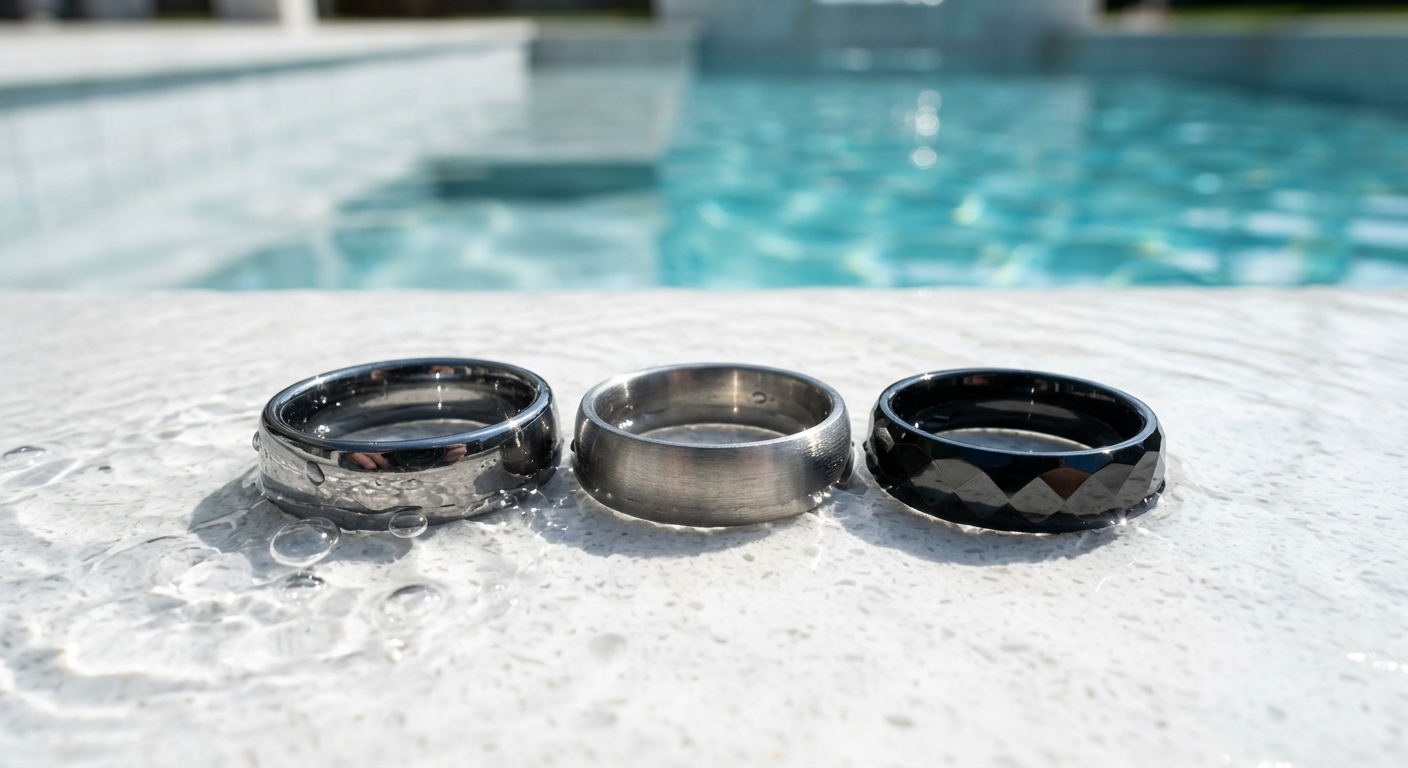
For most ring materials, chlorinated pool water is more damaging than natural saltwater. Chlorine is a reactive oxidising chemical — at pool concentrations of 1–3 parts per million, it can accelerate corrosion and degradation of susceptible metals. According to the New Zealand Ministry of Health guidelines on public pool water quality, chlorine concentrations in NZ pools typically range from 1–3 mg/L, which is sufficient to damage alloys in gold and silver rings over repeated exposure.
Ocean saltwater is primarily sodium chloride, which is less chemically reactive than chlorine. However, the combination of salt, UV radiation, and sometimes biological content (seawater is biologically active) can still degrade precious metals and compromise sealed finishes over time. For most durable metals — tungsten, titanium, ceramic — neither pool water nor ocean water poses a meaningful risk.
Hot Tubs and Geothermal Pools
New Zealand’s geothermal areas (Rotorua, Taupo, Hanmer Springs) add another variable: sulphur. Sulphur-rich water rapidly tarnishes silver and can affect gold alloys. If you’re visiting a geothermal pool or hot spring, remove your ring regardless of the material — the sulphur content, elevated temperature, and higher chemical concentrations create a much harsher environment than standard ocean or pool water.
The NZ Outdoor Lifestyle — Rings That Keep Up
New Zealand’s lifestyle is defined by beaches, rivers, lakes, and outdoor adventure. Many Kiwis spend summer weekends at the beach in Northland, the Coromandel, or the Bay of Plenty — and swimming with their ring on is simply part of the day. Choosing a ring that handles this lifestyle isn’t a luxury; it’s a practical necessity.
The most popular ring materials for active New Zealanders who want to wear their ring in the pool or ocean are:
- Tungsten carbide — highest hardness, scratch-resistant, completely water-safe
- Titanium — lightweight, biocompatible, fully corrosion-resistant
- Black ceramic — contemporary look, chemically inert, ideal for daily wear including swimming
- Carbon fibre — modern industrial aesthetic, water-resistant, lightweight
For men who work in trades or construction (see our guide on wedding rings for NZ tradies), the same logic applies: choose a material that can handle daily exposure to water, chemicals, and physical activity without degrading.
What About Ring Fit and Water Temperature?
An often-overlooked issue: fingers shrink slightly in cold water and expand in warm water. If you’re swimming in cold New Zealand ocean water, your ring may feel looser. In warm pools or hot tubs, it may feel tighter. This isn’t a material issue — it’s a fit issue. If you notice your ring is moving significantly during swims, consider getting it professionally resized. Check our New Zealand ring size guide for how to measure your ring size accurately, including allowances for finger swelling.
How to Care for Your Ring After Water Exposure
Even water-safe rings benefit from basic post-swim care. Saltwater and pool chemicals can accumulate in microscopic surface features, and regular rinsing extends the life of any ring’s finish significantly.
Basic Post-Swim Ring Care
- Rinse with fresh water — After every ocean or pool swim, rinse your ring under clean tap water for 30 seconds to remove salt and chlorine residue.
- Pat dry — Use a soft cloth to pat dry. Avoid rubbing aggressively if the ring has any inlay or coating.
- Air dry before storing — If you store your ring in a box or drawer, let it air dry completely first to prevent any trapped moisture.
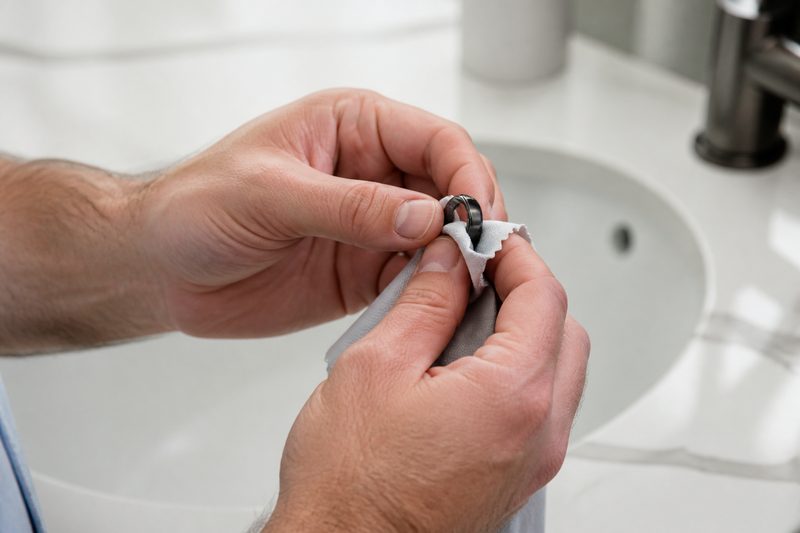
- Occasional polish — Use a microfibre cloth or jeweller’s polishing cloth every few weeks to restore brightness to polished finishes.
- Professional inspection annually — If you swim regularly, have a jeweller inspect any stone-set ring once a year. Chlorine can weaken prong settings over time.
What NOT to Do
- Don’t use bleach or abrasive cleaners — these damage both metal and any inlay material.
- Don’t clean with ultrasonic cleaners if your ring has a resin-sealed inlay (wood or stone).
- Don’t ignore discolouration — tarnishing or dullness after water exposure is a sign the material isn’t suited for regular immersion.
Which Ring Should You Choose for an Active Water Lifestyle?
If you’re buying your first wedding band or replacing one that hasn’t survived New Zealand summers intact, here’s a clear recommendation framework based on your lifestyle:
Quick Recommendation Guide
- Daily swimmer or surfer: Tungsten carbide or titanium — no restrictions
- Weekend beach-goer: Tungsten, titanium, ceramic, or carbon fibre
- Occasional swimmer who values style: Black ring (solid material) or ceramic
- Prefers wood inlay look: Remove before swimming; consider a second swim ring
- Gold or silver ring: Remove before pool or prolonged ocean exposure; rinse thoroughly after splashes
- Geothermal/hot spring visits: Remove any ring regardless of material
Many active Kiwis opt for a dedicated “adventure ring” — a durable tungsten or titanium band they wear during outdoor and water activities, reserving their more precious metal ring for formal occasions. This is a practical solution that protects your investment while keeping a ring on during activities.
Explore our full range of water-ready rings in the tungsten rings collection and titanium rings collection — built for New Zealand conditions.
Frequently Asked Questions
Can I wear my tungsten ring in the pool every day?
Yes. Tungsten carbide is one of the most chemically inert ring materials available. Daily pool use — including chlorinated water at standard pool concentrations of 1–3 mg/L — will not corrode, tarnish, or discolour a quality tungsten carbide ring. Simply rinse it with fresh water after each swim to prevent buildup.
Will saltwater damage my men’s wedding ring in New Zealand?
Saltwater (sodium chloride) will not damage tungsten, titanium, ceramic, or carbon fibre rings. It can, however, accelerate tarnishing in silver rings and cause gradual degradation of gold alloys over prolonged exposure. If you surf or swim in the ocean frequently, choose tungsten or titanium and rinse the ring with fresh water after each session.
Should I take off my ring at Hanmer Springs or Rotorua geothermal pools?
Yes — remove your ring at any geothermal pool in New Zealand. Sulphur-rich water tarnishes silver rapidly and can affect gold alloys. The elevated temperatures and high chemical concentrations in geothermal water are more aggressive than standard pool or ocean water. Even tungsten and titanium rings benefit from removal in this environment to avoid chemical accumulation on the surface.
Can I wear a wood inlay ring at the beach?
Brief splashes are generally fine for sealed wood inlay rings, but sustained immersion in ocean water or pool water is not recommended. The natural wood component can absorb moisture, swell, crack, or warp over time. Chlorine is particularly damaging to wood. For beach visits involving swimming, remove your wood inlay ring and store it safely out of direct sunlight and heat.
What is the best men’s ring material for an active NZ lifestyle?
Tungsten carbide and titanium are the top choices for active New Zealanders who swim, surf, or work outdoors. Both are corrosion-resistant, scratch-resistant, and require minimal maintenance. Tungsten is harder and heavier; titanium is lighter and slightly more flexible. Both are safe for pool and ocean use without any special care beyond a freshwater rinse after swimming.
Why does my gold ring look dull after swimming?
Gold rings dull after swimming primarily because of chlorine reacting with the alloying metals (copper, zinc, or silver) in the gold. Pure gold doesn’t tarnish, but wedding rings are typically 9–18 karat, meaning they contain significant amounts of reactive alloying metals. Chlorine oxidises these metals, creating surface tarnishing and eventual pitting. Remove gold rings before pool use and rinse thoroughly after any ocean exposure.
References & Sources
- Sport New Zealand — Active NZ Survey: Participation in Swimming and Water Sports
- Jewellers Association of Australia — Care and Maintenance of Precious Metal Jewellery — Exposure to Pool and Marine Environments
- ASM International — Properties and Selection: Nonferrous Alloys and Special-Purpose Materials — Corrosion resistance data for tungsten carbide, titanium, and gold alloys in chlorinated and marine environments
- Mens Rings Online NZ — Tungsten vs Titanium vs Silicone Wedding Bands: Which is Right for You?