
Men’s Engagement Rings vs Wedding Bands: NZ Buyer’s Guide

In short: A men’s engagement ring marks the promise to marry and is worn from proposal day, while a wedding band is exchanged at the ceremony as the formal mark of marriage. In NZ, most men skip the engagement ring and buy one wedding band, choosing the metal around lifestyle, daily comfort, and budget in NZD.
Two rings tend to mark the road to marriage in New Zealand: an engagement ring and a wedding band. They look similar at a glance, but they do different jobs, sit in different price brackets, and tend to be made from different materials. If you’re shopping from Auckland, Wellington, Christchurch or anywhere rural in between, the choice usually comes down to lifestyle, daily comfort, and what each ring is meant to represent.
This guide walks through both rings side by side, with NZ-specific notes on sizing, pricing in NZD, delivery, and the climate considerations that actually matter on the hand.
A quick history of the two rings
Engagement rings trace back to Ancient Rome, where they were given as a promise to marry. For most of that history they were worn by women only. The shift toward men wearing engagement rings is recent, driven partly by changing views on gender symmetry and partly by the simple fact that a lot of men like the idea of wearing the commitment from the day it’s made, not just after the ceremony.
Wedding bands are older and more universal. Both partners have worn them in some form for thousands of years, exchanged during the ceremony as the formal mark of marriage. The convention of wearing the band on the fourth finger of the left hand comes from an old belief that a vein ran from that finger straight to the heart. The anatomy is wrong but the tradition stuck.
How this plays out in New Zealand today
Most NZ couples still buy a wedding band each and an engagement ring for one partner. Increasingly though, men ask for an engagement ring of their own, and a quiet but growing number of grooms wear a silicone band day-to-day and keep a metal band for evenings and weekends. None of this is unusual anymore.
Design and material differences
The clearest difference between the two rings is purpose. An engagement ring announces the intent to marry. A wedding band marks the marriage itself. That difference drives almost every design decision.
Engagement rings: more expressive
Men’s engagement rings tend to be the more expressive of the two. They can carry a stone, a wider profile, a textured or hammered finish, or contrasting inlays. Materials commonly used include yellow, white or rose gold, platinum, tungsten, titanium and carbon fibre. A single diamond, a band of small stones, or a coloured stone like sapphire or black diamond are all common.
If you want the ring to read as an engagement ring rather than a wedding band, give it one distinct feature: a stone, a strong inlay, a bevelled or grooved profile, or an unusual material. That visual marker is what separates the two rings later when you wear them together.
Wedding bands: built for daily wear
Wedding bands are designed for everyday use, so they prioritise durability and comfort over flourish. Plain or lightly detailed gold and platinum bands remain the most traditional choice. Modern wedding bands often use tungsten, titanium or zirconium for their scratch resistance, lighter weight, and lower price compared with precious metals.
Silicone bands have become a real category in their own right in NZ. Tradespeople, farmers, hospitality workers, gym-goers and anyone who can’t safely wear a metal ring at work tend to keep a silicone band for the working week and a metal one for evenings. It’s a practical setup, especially in trades-heavy regions.
Symbolism: what each ring is saying
The two rings carry related but distinct meanings, and it’s worth being clear on which is which before you buy.
The engagement ring
An engagement ring is a public statement of intent. It announces that a wedding is coming. For a man receiving one, it tends to be a more personal, expressive piece, often chosen with input from both partners. The design can reflect work, hobbies, heritage, or simply taste. It’s a ring that’s allowed to have a personality.
The wedding band
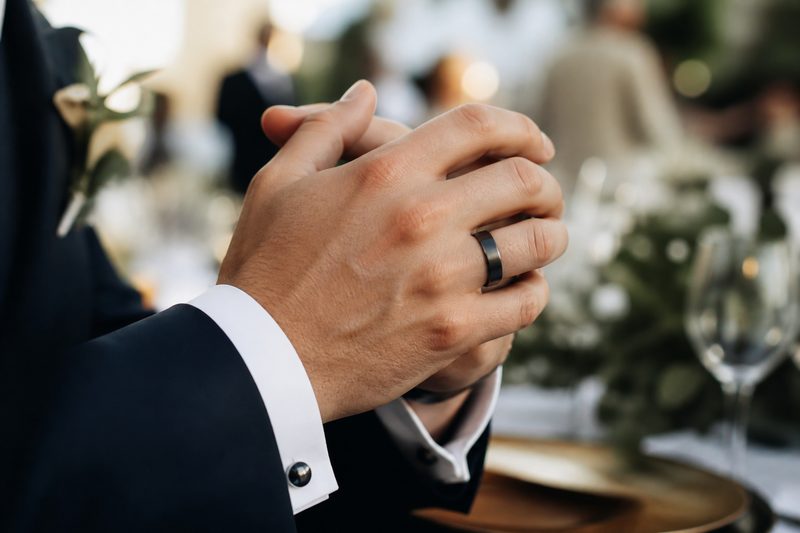
The wedding band marks the marriage itself. The unbroken circle is the whole point: a continuous loop with no start and no end. That’s why bands tend to be simpler. The simplicity is the message. Many couples choose matching or complementary bands at this stage, where the engagement ring is usually chosen for one person individually.
Making the right choice
Three practical factors tend to decide the ring: lifestyle, style, and budget. None of them is more important than the others, but ignoring any one of them usually leads to a ring that gets taken off and left in a drawer.
Lifestyle
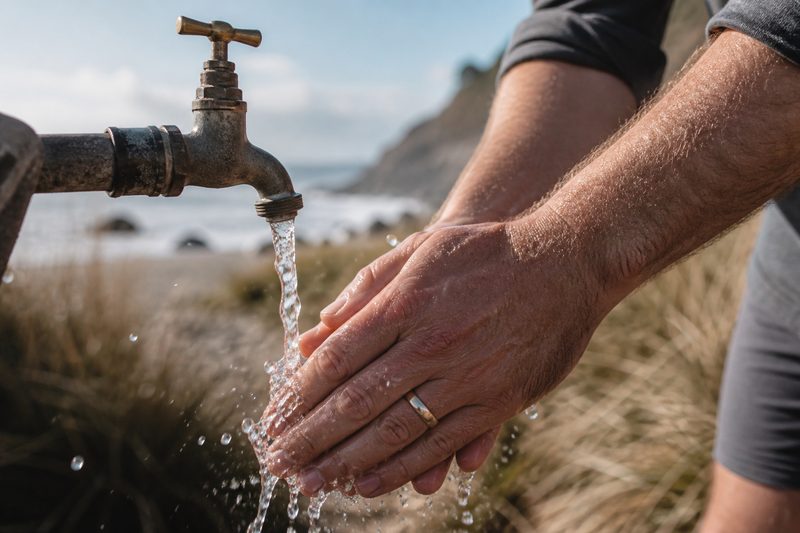
If you work with your hands — on a building site, in a workshop, on a farm, in a kitchen — a soft precious metal like 18k gold or platinum will scratch and dent quickly. Tungsten and titanium hold up far better to daily wear. If your work involves electrical hazards or machinery with rotating parts, a non-conductive, breakaway silicone band is genuinely safer than metal, and most NZ tradies who wear rings at work wear silicone for that reason.
Climate matters less than people expect in NZ, but humid Auckland summers and cold South Island winters do change finger size by half a size or so. A ring that fits perfectly in February can feel tight in July. Aim for a fit that’s comfortable across the year rather than perfect on the day.
Personal style
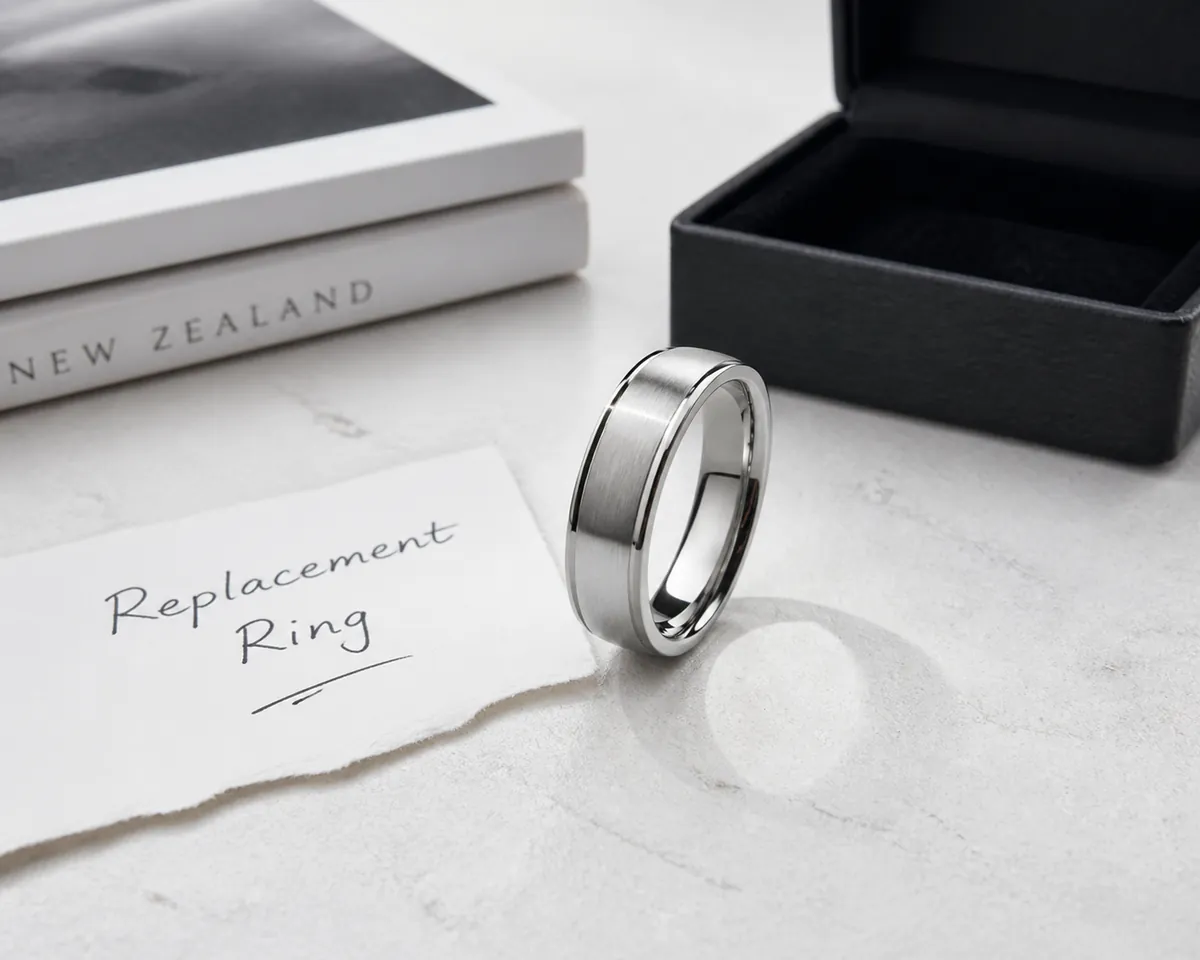
An engagement ring has more room for personality. A wedding band has less, and that’s a feature, not a limitation. If your daily style is quiet and unfussy, a 4–6mm plain or lightly brushed band is a safe forever choice. If you want something with more presence, a wider profile, a bevelled edge, or a contrasting inlay (wood, carbon fibre, meteorite) gives the ring character without crossing into engagement-ring territory.
Budget in NZD
All prices at Men’s Rings Online are listed in New Zealand dollars and include GST. There’s no surprise conversion at checkout and no separate import charge for orders within NZ. Engagement rings sit across a wide range — anywhere from a few hundred dollars for a clean titanium or tungsten design through to several thousand for gold or platinum with diamonds. Wedding bands usually cost less than the engagement ring, with plain tungsten and titanium bands typically the most affordable, and platinum and heavy gold the most expensive.
A realistic NZ planning split: budget the engagement ring first because it has more variables, then choose the wedding band to complement it without trying to match the spend.
Ring sizing in New Zealand
This is the question we get most often, so it’s worth being precise. New Zealand uses the same alphabetical ring sizing system as Australia and the UK — sizes run roughly from G through to Z+ in half steps. That means a NZ size R is the same as a UK size R and an Australian size R. US sizes are numeric and don’t line up directly, so if you’ve been sized in the US, use a conversion chart rather than guessing.
The most reliable way to size a finger is to measure an existing ring you already wear on the correct finger. Our NZ ring size guide includes a printable sizer and a chart for measuring an existing ring’s inside diameter in millimetres. Measure late in the day when fingers are at their largest, and avoid measuring straight after exercise or on a very cold morning.
Beyond online: other places to buy
An online retailer isn’t the only option, and it pays to know what each alternative actually offers.
Traditional jewellers
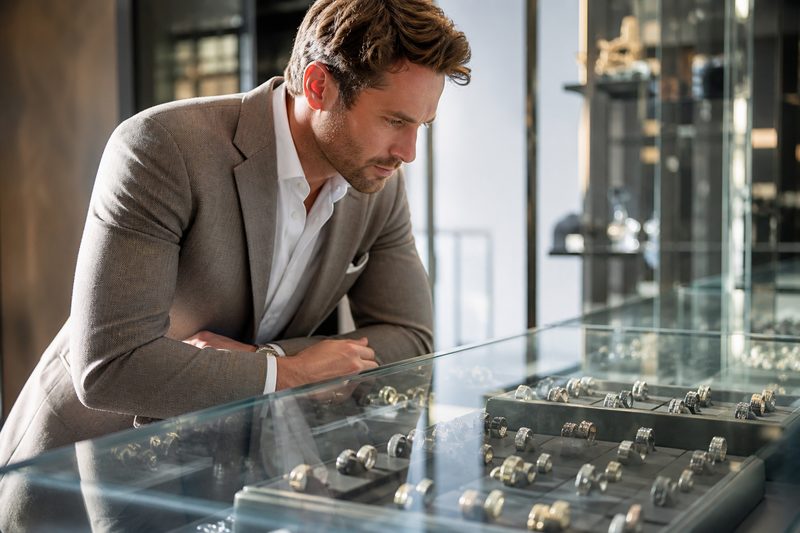
A physical jeweller in Auckland, Wellington or Christchurch lets you try rings on, get professionally sized in person, and walk out with the ring in hand. The trade-off is range and price: a single store can only stock so many designs, and overheads push prices higher than online equivalents.
Bespoke designers
If you want something genuinely one-of-a-kind — an engraved family symbol, a stone you already own reset, or an unusual material combination — a bespoke jeweller is the right call. Expect a four-to-eight week turnaround and a price premium for the design work itself.
Artisan and ethical sources
NZ has a solid scene of independent jewellers working with recycled gold, traceable stones, and locally sourced materials. If sustainability is part of the decision, ask specifically about metal recycling and stone provenance rather than relying on general claims.
Personalisation and current trends
Engraving is the most common form of personalisation and the easiest to add to either ring. Initials, a wedding date, coordinates of where you met or proposed, or a short phrase all work on the inside of the band. Wider bands (6mm and up) can take engraving on the outside as well.
Trends among NZ buyers right now lean toward matte and brushed finishes rather than high polish, mixed-metal designs (a rose gold inlay in a white gold band, for example), and inlays of wood, carbon fibre or meteorite. Wood ring inlays in particular have grown in popularity for grooms who want a natural element without committing to a fully wooden ring. Carbon fibre is the modern, light, scratch-resistant counterpart for anyone who wants something distinctly contemporary.
Delivery, returns and after-sale in NZ
Free standard delivery applies to orders shipped anywhere in New Zealand. Rural delivery addresses are covered too, although they typically add a day or two to transit time. Tracking is provided on every order. If a ring doesn’t fit on arrival, our resize and return process is built specifically around NZ buyers, so you’re not posting parcels overseas to get a different size.
The takeaway
An engagement ring and a wedding band are doing two different jobs. One announces the intent. The other marks the commitment. Choose the engagement ring for personality and meaning, and the wedding band for the next forty years of daily wear. Material, size, fit and budget all matter, but the rings only really succeed if you actually want to wear them every day.
Common questions
Do men in New Zealand usually wear an engagement ring as well as a wedding band?
Traditionally no, but it's becoming more common. A growing number of NZ grooms wear an engagement ring from the proposal onward and add a wedding band at the ceremony. Both can be worn together on the same finger, or the engagement ring can be moved to the other hand after the wedding.
What ring size system does New Zealand use?
New Zealand uses the alphabetical ring sizing system, the same one used in Australia and the UK. Sizes run from G through to Z+ in half steps. US numeric sizes don't convert directly, so use a sizing chart rather than assuming they match.
Are prices on Men's Rings Online in NZD and do they include GST?
Yes. All prices are listed in New Zealand dollars and are GST-inclusive. There are no surprise currency conversions or additional import charges for orders shipped within New Zealand.
Is delivery free across New Zealand, including rural addresses?
Standard delivery is free anywhere in New Zealand, including rural delivery addresses. Rural orders usually add an extra day or two to transit time. Every order is tracked from dispatch to delivery.
Which ring material is best if I work with my hands?
Tungsten and titanium are both significantly more scratch-resistant than gold or platinum and hold up well to daily wear. For trades, farming or any work with electrical or machinery hazards, a silicone band is the safer option because it breaks away under pressure. Many NZ buyers keep a silicone band for the working week and a metal band for evenings and weekends.