
Promise Rings for Men in NZ: A Practical Guide

Promise rings are no longer a one-sided tradition. More Kiwi men are wearing a ring that marks a commitment well before any engagement conversation starts, and the choices available now reflect that shift. Whether the promise is to a partner, to a long-distance relationship across the Tasman, or to a personal goal, the ring on your finger says something specific. This guide walks through what a men’s promise ring actually means in 2026, the materials that suit life in New Zealand, how sizing works here, and what to look for when you buy one online.
What a promise ring means today
A promise ring sits a step before an engagement ring. It’s a marker — of a relationship, a milestone, or a personal pledge — without the weight of a wedding date attached. Couples in their early twenties often use one to make a long-distance relationship feel real on both sides. Older couples sometimes wear matching promise rings while they decide whether marriage is the right next step, or in place of marriage altogether.
The promise doesn’t always involve another person. Some men buy a ring to mark sobriety, finishing a degree, recovery from injury, or a faith commitment. The point is that the ring stands for something specific that you’ve decided to hold yourself to, and that you’d be happy to explain if someone asked.
How it differs from an engagement or wedding ring
Engagement rings imply a wedding is being planned. Wedding rings sit on the fourth finger of the left hand in New Zealand and mark a completed ceremony. Promise rings have no fixed finger, no fixed style, and no ceremony attached. Most men wear them on the right ring finger, the right middle finger, or a pinky — whichever feels natural and doesn’t clash with a watch or other rings. If a wedding is on the horizon, plenty of guys move the promise ring to the other hand once a wedding band takes its place.
Why more Kiwi men are wearing them
The cultural shift is real. Men’s jewellery in general has moved from “wedding ring or nothing” to a normal part of how guys put themselves together, the same way watches did a generation earlier. Promise rings have benefited from that, partly because they fill a gap. There’s a real moment in a lot of relationships — say, when a partner moves to Auckland for work and you’re still finishing study in Dunedin — where a wedding isn’t on the table yet but the commitment is real. A ring is a practical way to mark that.
The other shift is that men now have genuinely durable options. Older promise rings were mostly thin gold or silver bands that didn’t survive a day on a building site or at the gym. Modern materials have changed the calculation completely.
Choosing a material that suits your life
This is where most decisions get made. The metal you pick shapes how the ring looks, how heavy it feels, what it costs, and how well it survives daily life in NZ — which for a lot of guys means salt water, surf, trades work, farm work, or full-time gym time.
Tungsten
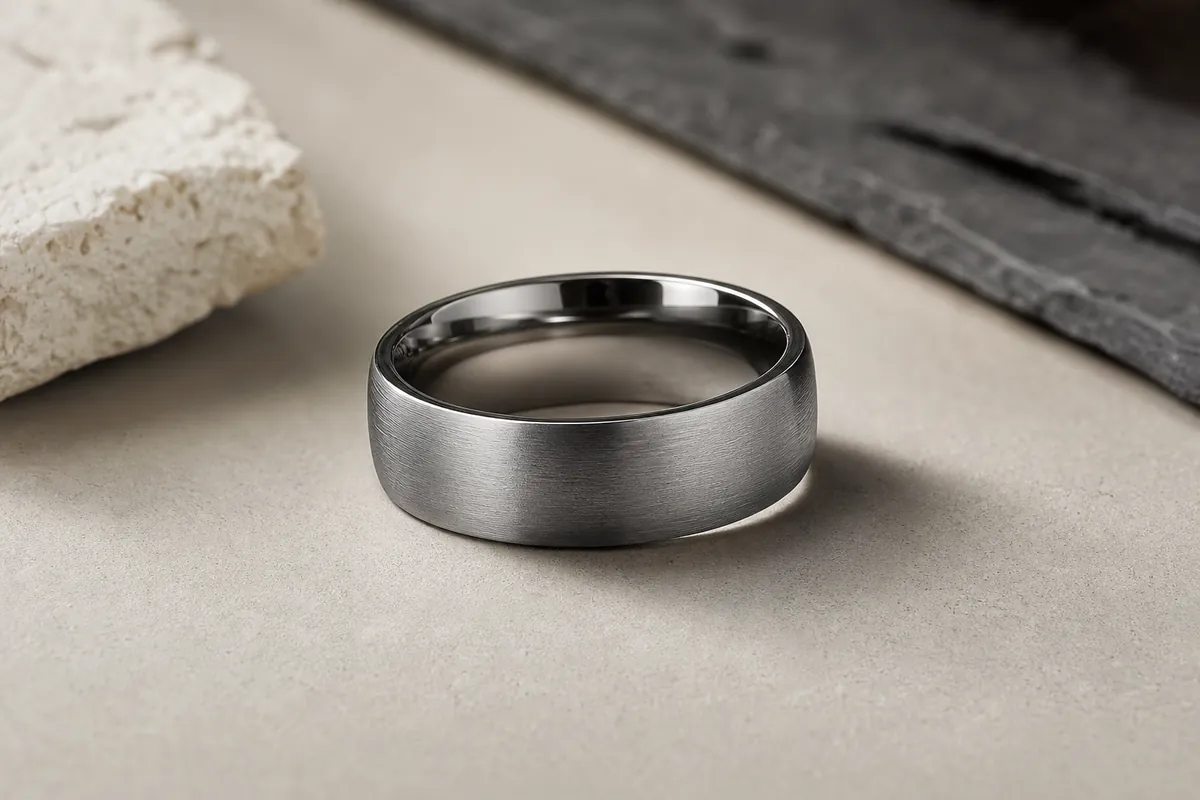
Tungsten carbide is the hardest ring material in common use. It resists scratching better than any precious metal, holds a mirror polish for years, and sits heavy on the finger in a way most men either love or find too noticeable. It’s also the most affordable serious option, usually well under NZD 300. The trade-off: tungsten is hard rather than tough. A direct knock on a tiled floor can crack it, though that’s also how it gets removed in an emergency — a jeweller can crack it off in seconds, which is safer than a metal ring that has to be cut. For trades, mechanics, and anyone working with their hands, tungsten is usually the right answer.
Titanium
Titanium is light, strong, hypoallergenic, and a softer grey than tungsten. It’s the material to choose if you don’t want to feel the ring while you’re wearing it, or if you’ve had reactions to nickel-plated jewellery in the past. It scratches more easily than tungsten but is also tougher — it bends rather than cracks. Good middle option, and a popular pick for guys who spend time in the water, since it doesn’t corrode. See the titanium rings for comparison.
Silicone
A silicone ring isn’t a replacement for a metal one — it’s a second ring you wear when a metal ring would be dangerous or annoying. Climbers, electricians, weightlifters, hospital staff, and new dads with a baby’s skin to worry about all keep one in the car or gym bag. They’re cheap, comfortable, and designed to tear off cleanly if the ring catches on something. Most men who own a promise ring own a silicone backup as well.
Gold
Gold still carries the most meaning for a lot of people, and it’s the choice if you want the ring to look like a piece of fine jewellery rather than industrial design. Yellow gold reads traditional, white gold sits closer to platinum, and rose gold has stayed popular for a decade now. Nine-carat is harder and cheaper; 18-carat is softer but a richer colour. Expect to pay more than for the alternative metals, and to be more careful at the gym. Gold men’s rings suit guys with desk jobs or those who want the ring to outlast the promise it was made for.
Other options
Stainless steel sits between titanium and tungsten on most measures and is hard to fault for the price. Carbon fibre and wood inlays give you texture and a less obvious “jewellery” feel — worth a look if you don’t usually wear rings and want something that reads as more of a personal object than an accessory.
Design choices: keep it specific to you
The plain band is still the most worn promise ring for a reason — it stays out of the way and works with everything. But the design is also the easiest place to make the ring mean something specific:
- Inside engraving. A date, a set of coordinates, an initial, or a single word on the inside of the band. Invisible from the outside, but it’s there every time you put the ring on.
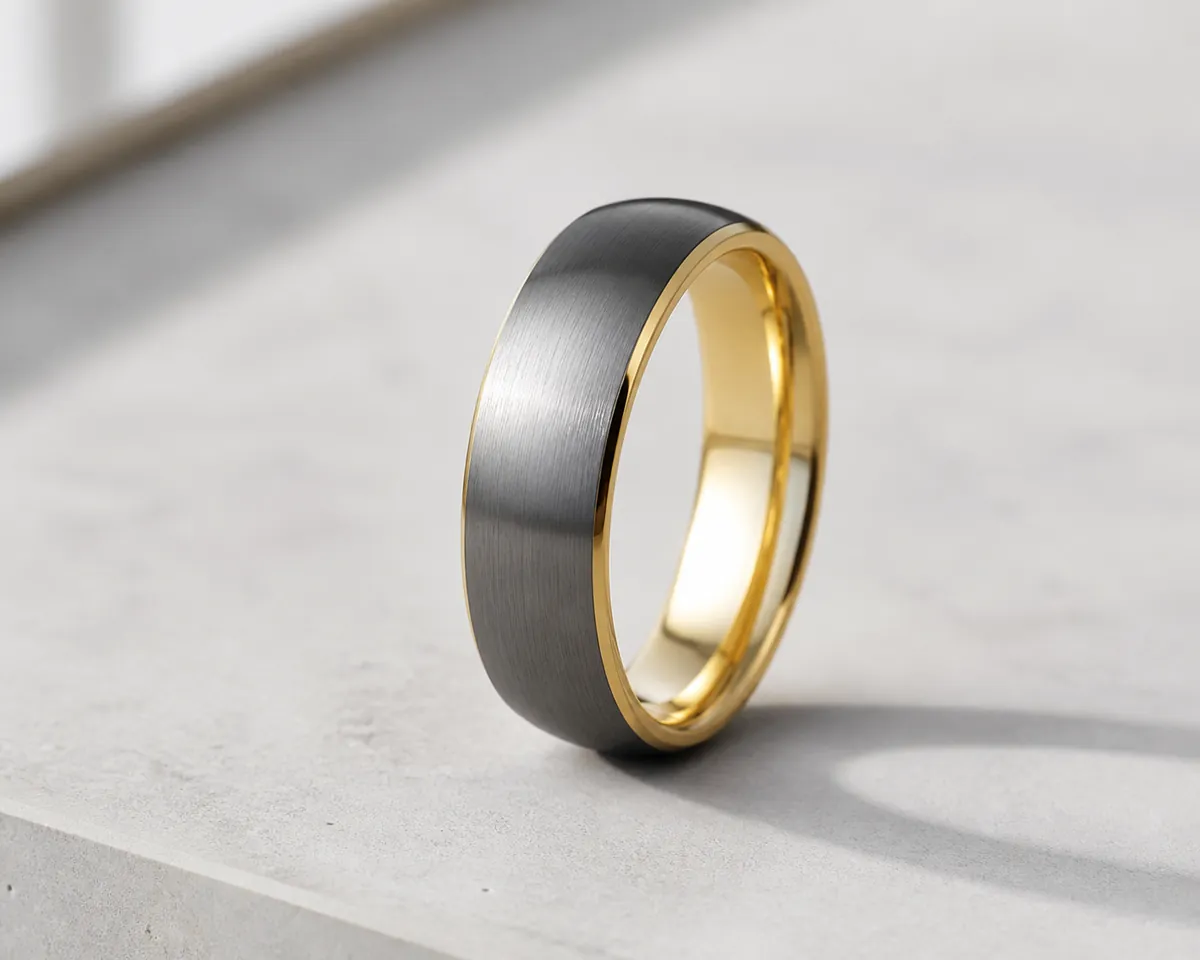
- A groove or inlay. A centre channel in a contrasting metal, a thin black line through brushed titanium, or a wood inlay. Adds character without making the ring loud.
- A small stone. A flush-set black diamond or a birthstone keeps the silhouette clean while adding something personal.
- Finish. Brushed, matte, or hammered finishes hide micro-scratches far better than mirror polish, which is worth knowing if you’d rather not think about the ring once it’s on.
Sizing for New Zealand
NZ ring sizes use the A–Z alphabetical system, which is identical to UK and Australian sizing. Most adult men sit between R and Z+2. If you don’t know your size, three options:
- Get sized in person at any jeweller in Auckland, Wellington, Christchurch, or your nearest town. They’ll do it for free.
- Use a printable sizing guide and a piece of string measured against a ruler. The NZ ring size guide covers this.
- Measure a ring you already wear on the correct finger by sliding it over a printed size scale.
Two things worth knowing. First, fingers swell in summer and shrink in winter — a Christchurch winter measurement and an Auckland summer measurement can be a full size apart on the same hand. Aim for a snug fit that’s slightly tight to get over the knuckle, not loose. Second, wider bands fit tighter than narrow ones at the same labelled size, so if you’re ordering an 8mm tungsten band and you usually wear a 4mm wedding band, size up by half.
Buying in New Zealand
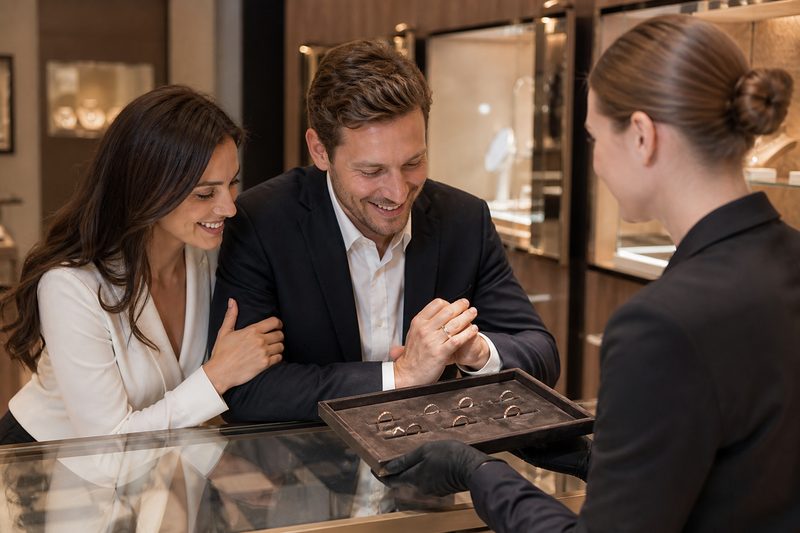
Most of the men’s promise ring market online sits with a small number of specialists. Mens Rings Online NZ is one of them — pricing is in NZD and GST-inclusive, delivery is free across New Zealand including rural addresses, and the catalogue covers everything from a NZD 30 silicone band to platinum.
A few things to check whenever you buy a ring online, regardless of the retailer:
- Returns and resizing. Confirm what happens if the size is wrong on arrival. Tungsten and titanium can’t be resized — only exchanged — so the returns policy matters more than for gold.
- Stock location. NZ-based stock arrives faster than rings dispatched from offshore, and there’s no risk of customs charges on top.
- Engraving lead time. Personalised rings add a few business days. Worth knowing if you’re planning to give the ring on a specific date.
- Photos versus reality. Black tungsten on a white background looks darker on screen than in daylight. If colour matters, check a real-life photo or video review before deciding.
Looking after a promise ring
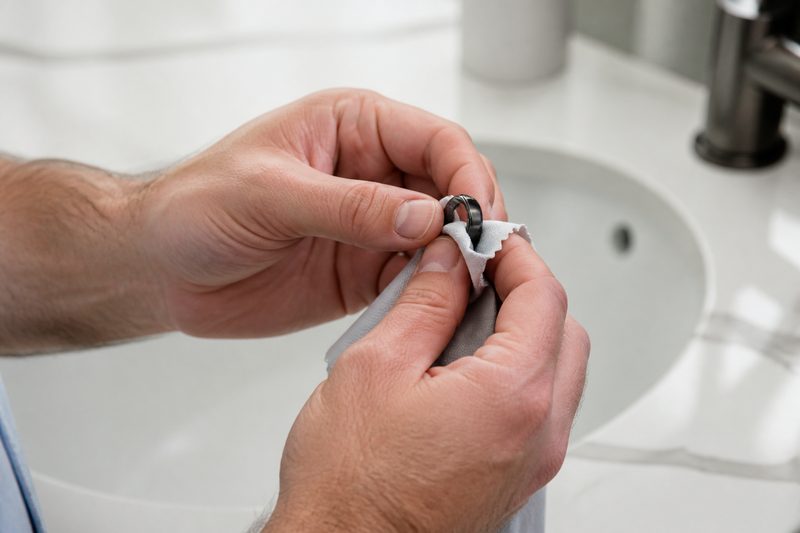
Most men’s rings need almost no maintenance. Tungsten and titanium can be cleaned with warm water and a soft brush. Gold benefits from an occasional dip in a mild jewellery cleaner. Take any ring off for the gym if it’s gold or has stones — pressure on a barbell will bend gold and pop stones loose over time. Salt water is fine for titanium and tungsten but rinse gold and silver afterwards. Store rings on a dish or in a small box rather than loose in a drawer where they’ll scratch other jewellery.
Making the decision
The right promise ring is the one you’ll still want to wear in five years. That usually means a material that suits how you actually live, a width and weight that doesn’t get in your way, and a design that’s plain enough not to date but specific enough to mean something. The promise is the part that matters; the ring is the daily reminder. Spend enough to get something that won’t disappoint you in a year, but don’t over-spend on the assumption that price equals significance — a NZD 200 tungsten band with the right date inside it is doing more work than a NZD 2,000 ring you take off every weekend.
Common questions
What finger do men wear a promise ring on in NZ?
There's no fixed rule. Most Kiwi men wear it on the right ring finger to avoid clashing with where a wedding ring would sit, but the right middle finger or either pinky are also common. If an engagement happens later, the promise ring usually moves to the other hand.
How much should I spend on a men's promise ring?
Silicone rings start around NZD 30 and tungsten or titanium bands sit between NZD 100 and NZD 400. Gold promise rings start around NZD 600 and go up depending on carat and design. Spend enough to get a ring you'll wear daily, but the meaning isn't tied to the price.
Is NZ ring sizing the same as Australian sizing?
Yes. New Zealand uses the A–Z alphabetical system, which is identical to UK and Australian sizing. If you've been sized in Sydney or Melbourne, that size carries over. US numerical sizes are different and need converting.
Can a tungsten or titanium promise ring be resized?
No — both materials are too hard to resize. If the size is wrong, the ring needs to be exchanged for a different one. That's why getting sized properly before ordering matters more for these materials than for gold or silver, which a jeweller can resize.
What's the difference between a promise ring and an engagement ring for men?
An engagement ring signals an upcoming wedding. A promise ring marks a commitment without a wedding necessarily being planned — it can stand for a relationship, a long-distance period, a personal goal, or a stage before engagement. Promise rings are also usually simpler and less expensive.