

Hypoallergenic Wedding Rings for NZ Grooms with Sensitive Skin

What Is a Hypoallergenic Wedding Ring?
A hypoallergenic wedding ring is one made from a metal or material that doesn’t trigger the skin reactions most Kiwi grooms associate with “cheap ring rash”: redness, itching, flaking, or that dull ache under the band by the end of a work day. Nine times out of ten, the reaction isn’t the ring itself, it’s nickel. Nickel gets alloyed into white gold and even some silver-toned rings to add strength and that bright, cool colour, and it’s one of the most common contact allergens on the planet. The Mayo Clinic notes that nickel allergy affects a substantial share of the population, and jewellery contact is one of the leading causes of flare-ups.
For grooms who’ve never had a reaction before, this can be genuinely confusing. You buy a ring, wear it for a fortnight, and suddenly there’s a rash exactly the width of the band. That’s not bad luck, it’s chemistry. Sweat and moisture break down the surface of a nickel-alloyed ring slowly over time, releasing trace amounts of the metal into the skin. Tradies, gym-goers, and anyone whose hands are in water often notice it faster than someone working a desk job, simply because the ring gets more contact with moisture.
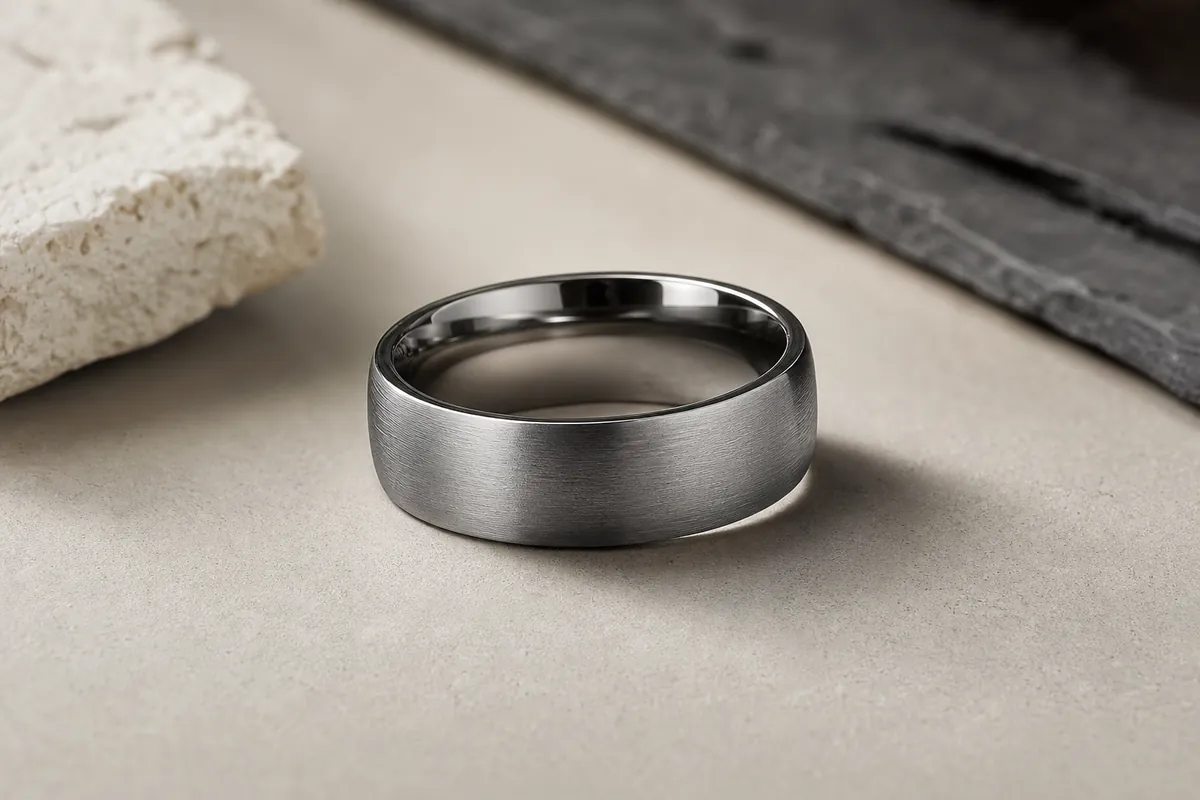
Hypoallergenic doesn’t mean “soft” or “cheap alternative” either. Materials like titanium and tungsten carbide are some of the toughest ring metals available, full stop. They’re just chemically inert, so your skin has nothing to react to. That’s why so many grooms who’ve had a bad experience with a traditional band end up loving their replacement more than the original.
Choosing the Right Ring for Sensitive Skin
The first step is figuring out exactly what you’re reacting to, if you’ve had a problem before. Nickel is the obvious suspect, but cobalt is the second most common one, and it hides in some cobalt chrome bands marketed as “affordable alternatives to platinum.” If you’ve ever had a reaction to a watch clasp, belt buckle, or the button on your jeans, there’s a good chance nickel is your issue and you should steer clear of anything that isn’t explicitly nickel-free.
Once you know what to avoid, the safest bets are materials that are naturally free of the culprit rather than “nickel-free” alloys that still contain trace amounts. Titanium is the gold standard here. It’s biocompatible enough that it’s used in surgical implants and pacemakers, so a ring sitting on your finger eight hours a day is a non-issue. Tungsten carbide is another strong option, it’s scratch-resistant to the point of being almost indestructible, though it is brittle rather than bendable if it ever needs resizing.
Ceramic and carbon fibre round out the list of materials worth considering if metal allergies are a genuine concern rather than just a preference. Both are inert, lightweight, and increasingly popular with grooms who want something that looks distinctly modern rather than a scaled-down version of a traditional band. If you want to browse a few finishes before deciding, the ceramic rings range and the carbon fibre collection are worth a look side by side.
Fit matters just as much as material. A ring that’s too tight traps moisture and sweat against the skin, which can aggravate even a hypoallergenic material over a hot Auckland summer. Get properly sized in person if you can, or use a printable sizer at home and size up half a size if you’re between measurements. A slightly looser fit with airflow beats a snug one that never quite dries out.
Top Styles and Options
Titanium bands are the most requested option for good reason. They’re roughly 40% lighter than a comparable tungsten ring, they take a brushed or matte finish beautifully, and they can be resized in most cases because titanium has slightly more give than tungsten carbide. For grooms who work with their hands, this is often the deciding factor.
Black zirconium has become the standout style choice over the last few years. It starts out silver and is heat-treated to develop a deep, near-permanent black oxide layer, so you get a genuinely black ring without any coating that can chip or wear through. It’s naturally hypoallergenic and holds up well to daily knocks. Browse the black rings collection if that finish appeals.
Silicone rings have carved out their own niche, especially for tradies, gym regulars, and anyone who works around machinery where a metal ring is genuinely a safety hazard. Medical-grade silicone is soft, breathable, and designed to break away under pressure rather than crush a finger caught in equipment. They come in enough finishes now that “silicone ring” doesn’t mean “one plain black loop” anymore. There are black silicone options, blue silicone bands, and even bronze and brown silicone finishes if you want something that reads as a proper ring rather than a gym accessory.
If you’d rather stick with a metal that still has traditional weight and shine, look at nickel-free options in the gold rings for men range or a custom titanium ring finished to look closer to platinum or white gold without the allergen risk. For grooms wanting a stone set into the band, the diamond rings for men collection includes settings built on hypoallergenic metal bases.
What to Consider Before You Buy
Ask the retailer directly what the ring is made from, not just the marketing name. “Titanium” can mean grade 2 commercially pure titanium or a titanium alloy, and most alloys used in jewellery are still nickel-free, but it pays to confirm rather than assume, especially if you’re buying from an overseas marketplace listing rather than a specialist. A reputable New Zealand retailer will list the exact composition on the product page, not just a lifestyle photo and a price.
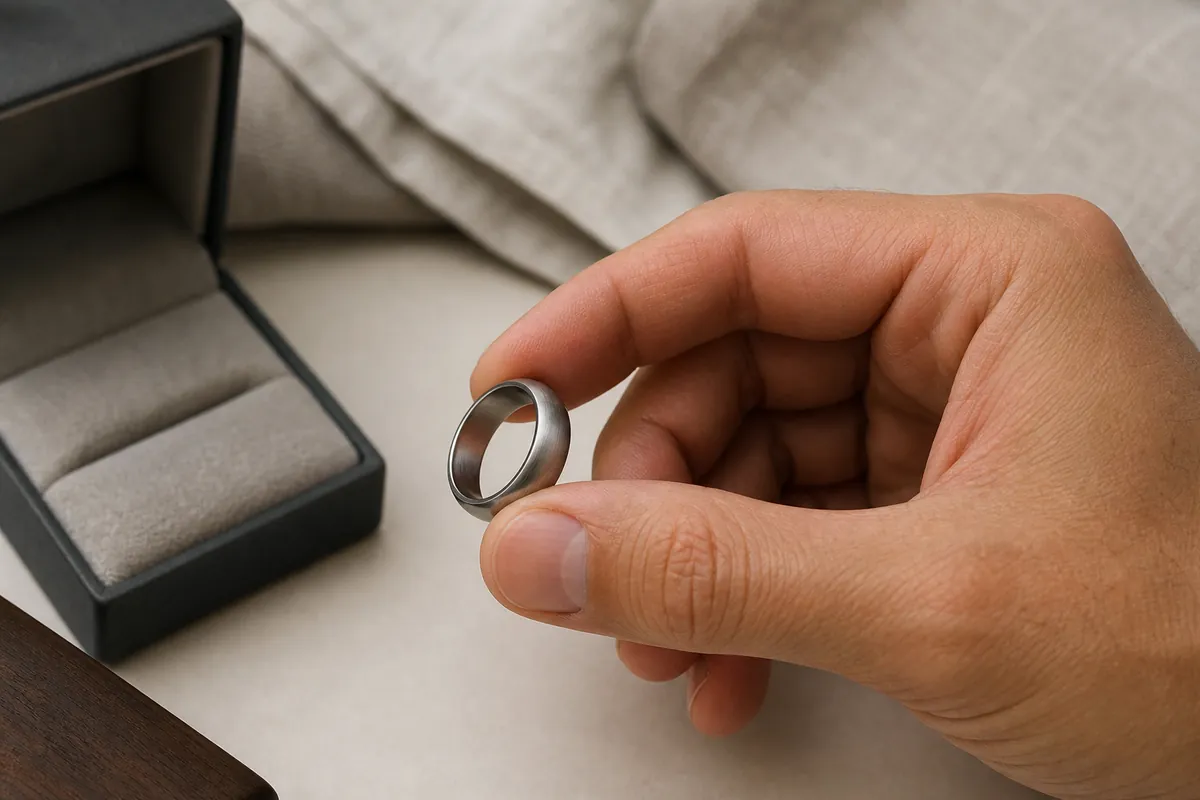
Resizing is the practical question people forget to ask until it’s too late. Tungsten carbide and ceramic rings generally can’t be resized because of how hard and brittle the material is, so getting the size exactly right the first time matters more than it would with a soft gold band. Titanium has some flexibility for minor resizing, and silicone rings obviously come in a size range you simply swap between. If your weight tends to fluctuate, or you expect your hands to change size with age or activity level, factor that into which material you choose.
Think about your actual daily routine too. If you’re a mechanic, electrician, or work anywhere near machinery, a hard metal ring carries a real de-gloving risk if it catches on something. That’s exactly the scenario silicone rings were designed to solve, and plenty of tradies keep a silicone band for work and a metal one for everywhere else. If you want a single ring for both custom-made to your exact spec and lifestyle, the custom-made rings service is worth a conversation before you commit to an off-the-shelf option.
Budget plays into this more than people expect. Titanium and tungsten sit well below traditional gold or platinum pricing while outperforming them on durability, which is part of why hypoallergenic materials have become the default rather than the alternative for a lot of grooms. If cufflinks or other groomsmen accessories are on your list too, the cufflinks range is worth checking while you’re sorting the wedding day details in one go.
Tips From the Experts
Jewellers who deal with reactive skin day in and day out will tell you the same three things. First, test before you commit if you possibly can. A lot of specialty retailers can supply a sizing ring in the actual material so you can wear it for a day or two before the real purchase goes ahead. Second, keep the ring clean. Even inert materials like titanium and ceramic can trap soap residue, sweat, and skin cells against the finger, and that build-up alone can irritate skin that’s already sensitive. A quick clean with warm water and a soft cloth once a week solves most of it.
Third, and this one catches people out, watch for reactions to things touching the ring rather than the ring itself. Hand sanitiser, certain sunscreens, and some gym equipment grips can react with skin already under a band and get mistaken for a metal allergy. If irritation shows up suddenly after months of wearing the same ring with no issue, look at what changed around it before assuming the ring has failed you.
Dermatologists consulted by bridal and lifestyle publications consistently point to titanium and medical-grade silicone as the two safest starting points for anyone with a documented nickel or cobalt allergy, largely because both have such a long track record in medical and surgical applications outside of jewellery entirely. That’s a useful shortcut if you’re standing in a shop trying to choose between a dozen similar-looking bands.
Frequently Asked Questions
What is the best hypoallergenic wedding ring nz?
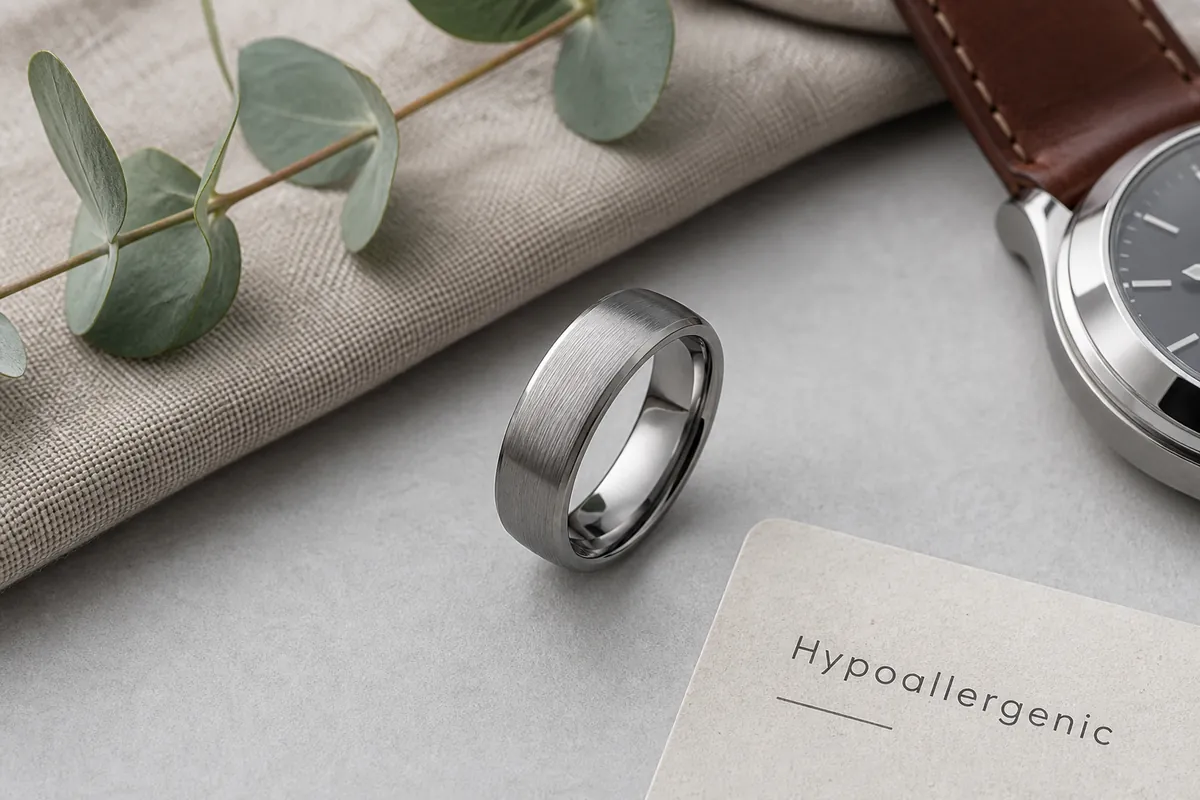
Titanium is generally the top pick for most grooms because it’s lightweight, naturally nickel-free, and can still be resized if needed. Tungsten carbide and ceramic are excellent runners-up if you want maximum scratch resistance and don’t mind that they can’t be resized later.
How do I know which hypoallergenic wedding ring is
Start with your lifestyle rather than the look. If you work with your hands or around machinery, silicone or a lighter titanium band makes sense; if you want something with more traditional shine, a nickel-free titanium or gold option finished to look like platinum works well. If you’ve had a reaction before, ask what specific metal caused it so you can rule out the same allergen.
What should I look for when buying a hypoallergenic
Get the exact material composition in writing, not just a marketing label like “hypoallergenic,” since that term isn’t regulated. Also confirm whether the ring can be resized later, and check the retailer’s return policy in case your skin reacts to a material you haven’t worn before.
Are there budget-friendly hypoallergenic wedding ring
Yes, silicone rings are the most affordable hypoallergenic option and come in dozens of colours and finishes. Titanium bands also sit well below the price of gold or platinum while lasting just as long, so budget doesn’t have to mean compromising on comfort.