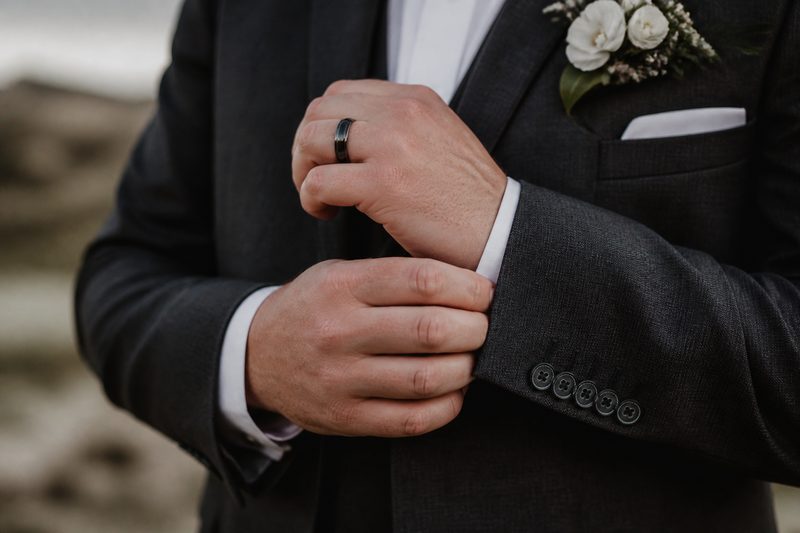

Can You Resize a Tungsten or Titanium Wedding Ring? NZ Guide

Why Resizing Actually Matters
Every second phone call we get from a bloke who’s just proposed goes something like this: “I ordered a size Z, but what if it doesn’t fit right?” It’s a fair question, and it matters more with tungsten and titanium than it does with a traditional gold band. With gold, a jeweller can heat the metal, cut it, add or remove a sliver, and solder it back together. That’s been standard practice for a hundred years. Tungsten and titanium don’t play by those rules.
Tungsten carbide is one of the hardest metals used in jewellery, harder than steel, which is exactly why blokes love it for a work ring. That same hardness is the problem. A jeweller’s sizing tools rely on the metal being able to stretch or compress a fraction of a millimetre without breaking. Tungsten has almost no give. Push it past its limit and it doesn’t bend, it fractures, sometimes right there on the bench. We’ve seen rings come back from other jewellers in two pieces after a well-meaning attempt to “just open it up a bit.”
Titanium is a different story, but only slightly better. It’s lighter and more forgiving than tungsten, and a handful of specialist jewellers here in New Zealand do have the equipment to nudge a titanium band up or down by a quarter to half a size. Beyond that, you’re asking for trouble. The metal work-hardens as it’s manipulated, meaning the more you push it, the more brittle it becomes, so most workshops will only attempt one small adjustment in the ring’s lifetime.
This is the whole reason we push customers hard on getting sizing right before the ring ever ships. It’s cheaper, faster and a lot less stressful than trying to fix a fit problem after the fact.
Choosing the Right Fit First
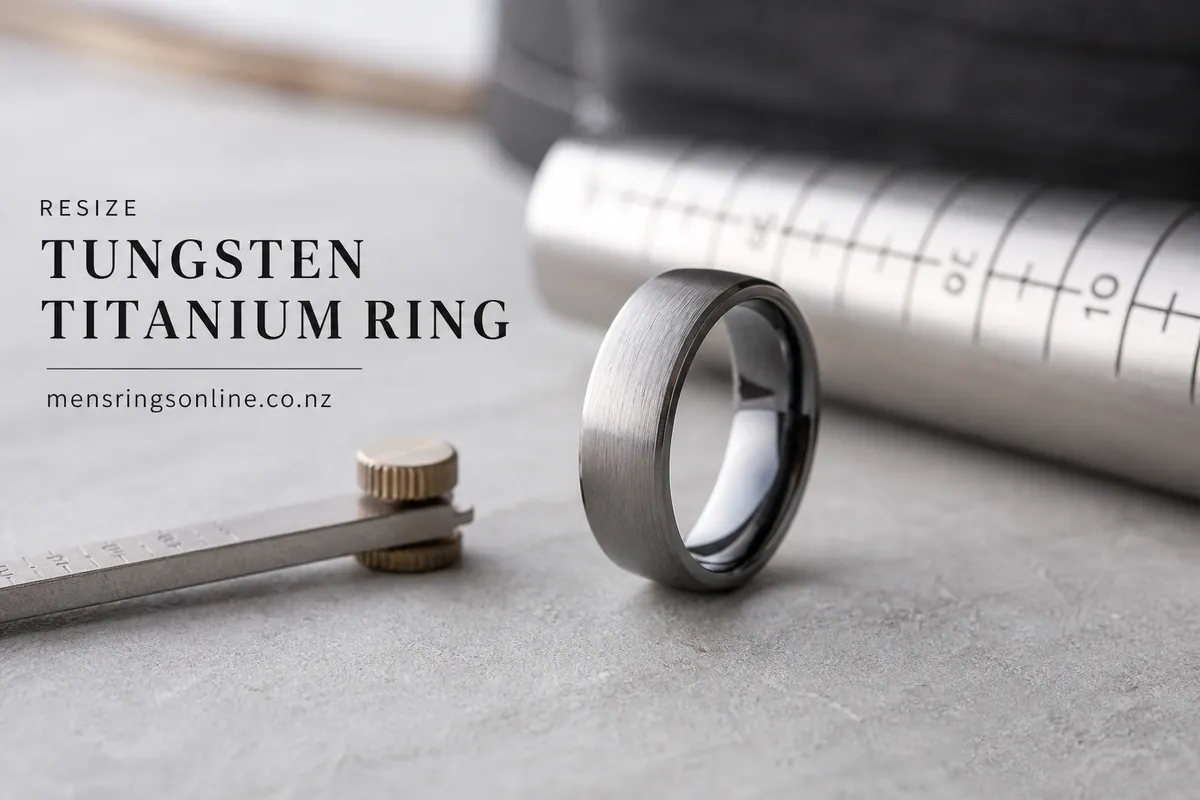
Getting the size right the first time isn’t guesswork, it’s a proper measurement done at the right time of day. Fingers swell in heat and shrink in the cold, so measuring first thing on a winter morning will give you a different number than measuring after a hot Auckland afternoon. Our rule of thumb: measure in the evening, after you’ve been on your feet for a few hours, and avoid measuring straight after exercise or a big feed of salty takeaways.
If you’re ordering online rather than trying rings on in a showroom, get a free ring sizer sent out, or measure a ring you already own that fits the same finger well. Don’t eyeball it against a chart on a screen, monitor sizes vary and you’ll end up half a size out more often than not. For anyone stuck between two sizes, we always recommend sizing up rather than down. A slightly loose ring is annoying. A ring that won’t come off over the knuckle is a trip to the emergency room with a ring cutter.
Comfort-fit bands, which have a slightly domed interior rather than a flat one, also wear differently to a standard flat-band ring of the same stated size, often fitting a touch looser. If you’re moving from a flat gold band into a tungsten or titanium comfort-fit style, it’s worth going half a size down from what you’d normally wear. This is exactly the kind of detail our team walks through with customers before an order goes out, because once a tungsten ring is cut to size, that’s the size it stays.
Weight changes are the other big variable blokes forget about. If you’re mid weight-loss, training for a wedding day physique, or on the other end of it and know your hands tend to puff up as you get older, factor that in now rather than hoping a resize will bail you out later.
Styles Worth Considering
If getting the size locked in forever makes you nervous, the good news is you’ve got options that don’t carry the same risk. Silicone bands are the obvious one. They’re built for exactly this problem, gym junkies, tradies and anyone whose finger size shifts through the year love them because a new one costs next to nothing to replace. Have a look through our black silicone ring range if durability with zero resizing risk is the priority, or check the blue silicone options and brown silicone styles if you want something with a bit more colour for everyday wear alongside your main band.
Ceramic sits in an odd middle ground. It’s scratch-resistant and holds a polish beautifully, but like tungsten it’s a hard, brittle material that can’t be stretched or compressed without risking a crack. If you love the look, treat a ceramic ring the same way you’d treat tungsten: get the size dead right up front.
Carbon fibre bands are another popular pick for blokes who want something lightweight and modern-looking. They generally can’t be resized either, since the material is layered and bonded rather than a single malleable metal, but they’re usually more affordable to replace than a tungsten equivalent if your size does change. Our carbon fibre ring collection has a good spread of finishes if that’s the direction you’re leaning.
For blokes who really can’t settle on tungsten versus titanium and want the peace of mind of a resizable option down the track, gold is still worth a look, even paired with a modern black or brushed finish. A gold wedding band can be resized the traditional way multiple times over its life, which is a genuine advantage if your weight fluctuates or you’re buying young and expect your hands to change over twenty or thirty years.
And if none of the standard ranges tick every box, a custom titanium ring lets you lock in exact sizing, finish and detailing from the start, which sidesteps the resizing question altogether because it’s built to your measurements from day one.
What to Check Before You Buy
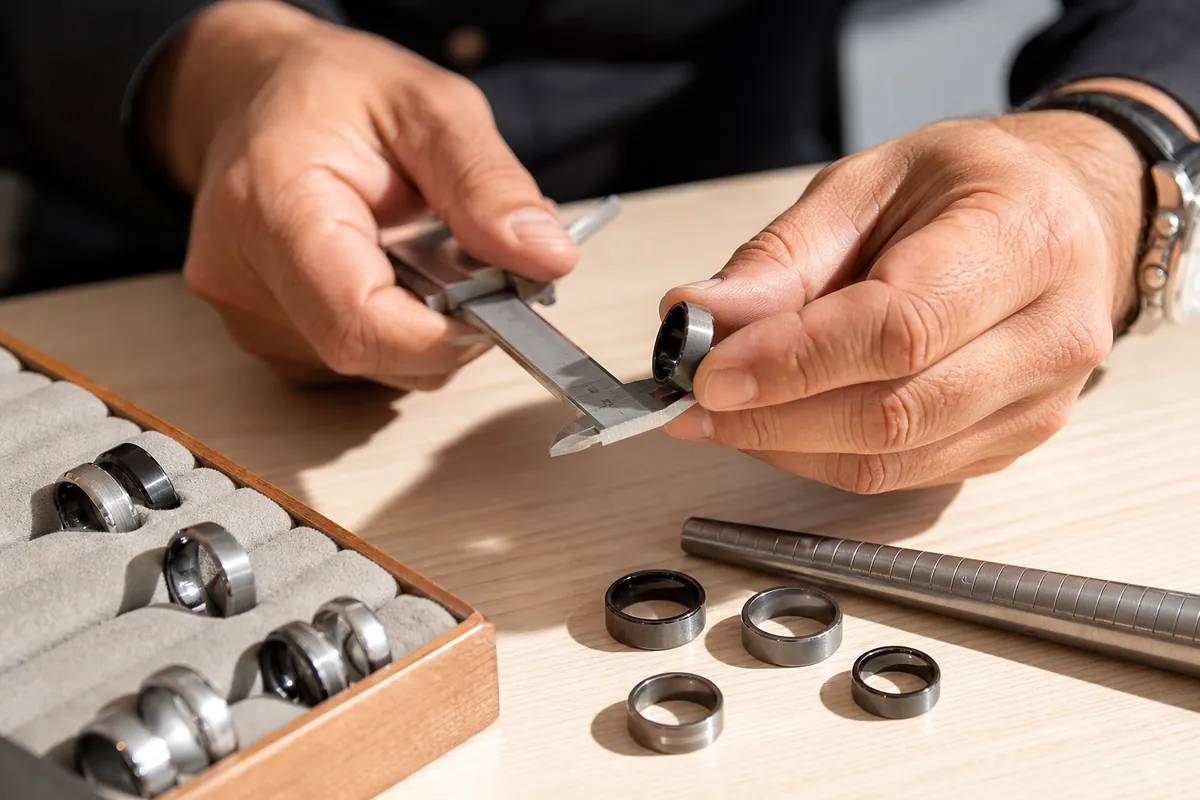
Before you commit to a tungsten or titanium band, ask the seller three things directly. First, what’s their exchange policy if the size is wrong after the ring arrives? A reputable NZ retailer will offer a straightforward exchange for a different size within a reasonable window, usually 30 to 60 days, provided the ring hasn’t been engraved or damaged. If a seller won’t commit to that in writing, that’s a red flag worth walking away from.
Second, ask whether the ring is a standard stock size or made to order. Standard sizes ship faster but you’re limited to whole and half sizes. Made-to-order and custom pieces take longer to arrive but can be built to a quarter size if you’ve had a proper in-person fitting, which matters more than people think when a ring sits right on the edge between two standard sizes.
Third, check what happens to engraving if you do need an exchange. Most retailers won’t refund or swap an engraved ring, since the personalisation makes it a one-off item. If you’re not one hundred percent certain of your size, get the plain ring first, confirm the fit over a week or two of daily wear, then send it back for engraving once you know it’s right.
It’s also worth thinking about your finger shape, not just the numerical size. Some blokes have a noticeably larger knuckle than the base of the finger, which means a ring that slides on comfortably might then be loose once it’s past the knuckle, or vice versa. Mentioning this when you order, or trying the ring on in person if you’re near a showroom, avoids a lot of the guesswork that leads to resizing headaches in the first place.
Tips From the Trade
Jewellers who’ve worked with hard metals for years all say roughly the same thing: prevention beats correction every time with tungsten and titanium. A few things we tell customers directly. Get sized in person if you possibly can, even if you end up ordering online afterwards, because a proper ring sizer in hand beats any printed chart or string-around-the-finger method.
If you’re buying titanium and there’s a real chance you’ll need a small adjustment later, ask the retailer upfront whether they offer resizing as a service or whether you’ll need to source a specialist jeweller yourself. Not knowing the answer until after the wedding is a bad time to find out titanium resizing isn’t something your local mall jeweller handles.
Keep the receipt and any sizing documentation somewhere safe. If a ring genuinely does crack or need replacement down the track, most reputable retailers will offer a discounted replacement rather than leaving you to pay full price twice, but only if you can show proof of the original purchase and size ordered.
Finally, don’t let a partner’s engagement ring resizing experience set your expectations for a tungsten or titanium band. Diamond engagement rings in gold or platinum settings are almost always resizable, which is why so many people assume the same applies to every wedding ring. It doesn’t, and the earlier you build that into your buying decision, the less stressful the whole process becomes. Browsing a black ring collection or comparing finishes side by side before you order is a far better use of an evening than dealing with a sizing dispute after the wedding.
FAQ
Best Tungsten or Titanium Ring to Resize?
There isn’t really a “best resize” ring in tungsten or titanium, because neither material resizes reliably. If flexibility matters more to you than the hardness of these metals, a silicone or gold band will serve you better long term, while a custom-made tungsten or titanium ring built to a confirmed size avoids the problem entirely.
How do I know which resize option is right for me?
Think about how stable your finger size has been over the past two or three years. If it’s barely changed, tungsten or titanium in a confirmed size is fine. If your weight or activity level shifts seasonally, lean toward silicone, gold, or a retailer with a genuinely flexible exchange policy.
What to Look for When Buying a Ring?
Check the retailer’s exchange window, confirm whether the ring is stock or made-to-order, and get properly sized in person if at all possible. Avoid engraving until you’ve worn the plain band for at least a week to confirm the fit.
Any Budget-Friendly Sizing Options?
Silicone bands are the cheapest safety net, often costing a fraction of a metal ring, so buying a couple of sizes to test comfort before committing to tungsten or titanium isn’t a big outlay. Carbon fibre rings also tend to be more affordable to replace than a tungsten equivalent if your size does change.