
Why Men Wear Engagement Rings in NZ: Meaning & Tradition

In short: More Kiwi men are wearing engagement rings because the old one-sided convention no longer fits. Since same-sex marriage was legalised in NZ in 2013, both-partners-ringed has become common, and heterosexual couples have followed. Shared ring costs, changing gender roles, and a preference for symmetry mean men’s engagement rings are now a quiet but real norm across Auckland, Wellington and beyond.
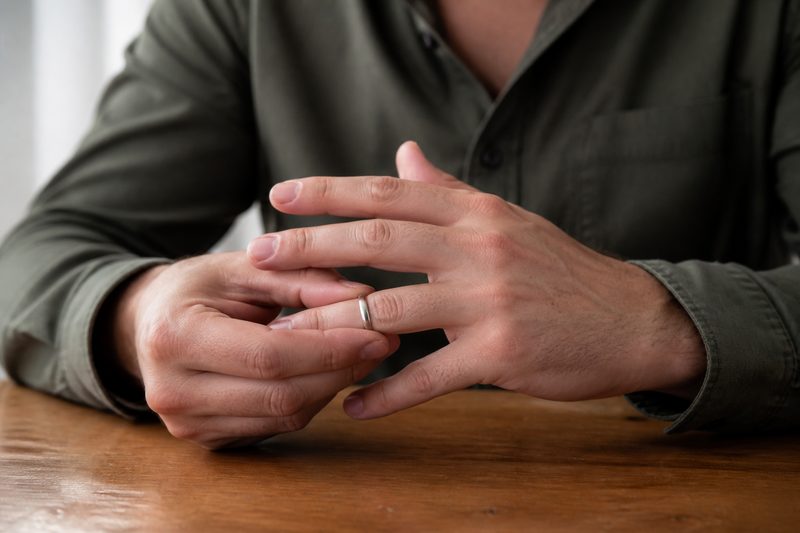
Walk through Britomart on a Friday evening and you’ll spot something that would have been rare a decade ago: men wearing engagement rings. Not wedding bands, not signet rings passed down from a grandfather, but engagement rings worn during the months between proposal and wedding day. The shift is quiet but real, and it’s happening across Auckland, Wellington, Christchurch and smaller towns from Whangarei to Invercargill.
This piece looks at why the tradition is changing, what it means for Kiwi couples, and how to pick a ring that suits both the moment and the everyday reality of life in New Zealand.
A Tradition That Looks Different Now
For most of the last century, engagement rings in New Zealand followed a one-sided pattern: one partner proposed, the other wore the ring. The proposing partner usually went ringless until the wedding day. That pattern wasn’t ancient law, just convention, and conventions change.
Where the Shift Comes From
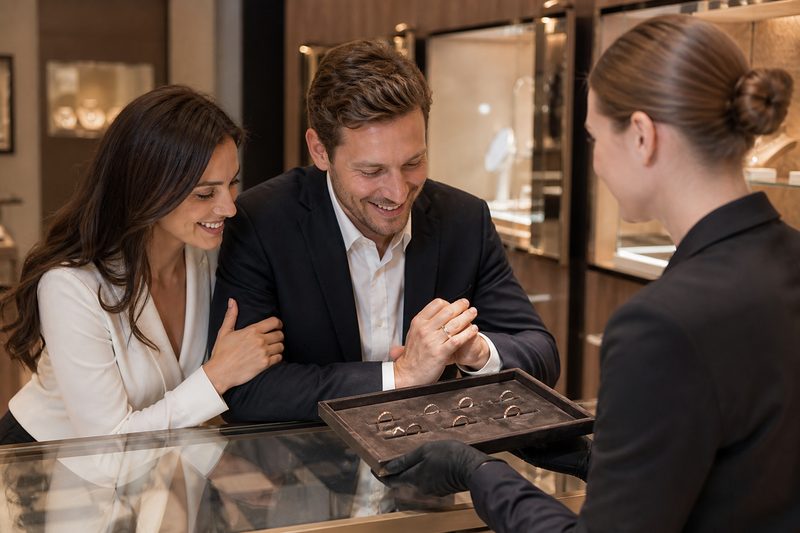
Several threads pull this change along. Same-sex marriage became legal in NZ in 2013, and many same-sex couples simply chose to both wear rings from the engagement onwards because the older script didn’t fit. Heterosexual couples noticed the symmetry and started asking why they couldn’t do the same. Add in shifting ideas about gender roles, more couples splitting the cost of rings rather than one person buying for the other, and the practice of both partners wearing a ring at engagement started to feel less like a novelty and more like a sensible option.
Not Replacing the Wedding Band
An engagement ring for a man is worn in addition to, not instead of, a wedding band. Most men who choose this route wear the engagement ring on the right hand during the engagement period, then move it across or pair it with the wedding band after the ceremony. Others retire the engagement ring after the wedding and keep only the band. Both approaches are common.
What the Ring Actually Says
Symbols only work if they mean something to the people involved. For most men choosing to wear an engagement ring, the meaning sits in one of a few buckets.
Mutual Visibility
An engagement is a public commitment. When only one partner wears a visible sign of it, the other can go about daily life without strangers, colleagues or new acquaintances knowing they’re spoken for. Some couples don’t mind that asymmetry. Others find it strange that one partner gets a daily, physical reminder of the promise and the other doesn’t. Wearing matching or complementary men’s rings through the engagement period evens that out.
A Tangible Reminder
Engagements in NZ run anywhere from a few months to several years. That’s a long stretch of decisions, planning meetings with venues, family dynamics and ordinary life. A ring on the finger is a small daily anchor: a reminder of why all of that planning is happening in the first place.
Personal Style
For men who already wear rings, adding an engagement ring is a natural extension. For men who don’t, it can be the first ring they’ve ever worn, which makes the choice of material and design genuinely important. A ring that feels wrong on the hand will get left in a drawer, no matter what it symbolises.
Choosing a Material That Fits NZ Life
New Zealand’s climate, lifestyle and work patterns shape ring choices more than most people realise. A ring that’s perfect for a desk-bound office worker in central Wellington may not survive a season of farm work in the Waikato. The good news is the range of materials available now is much wider than it was even ten years ago.
Tungsten
Tungsten rings are extremely hard, scratch resistant and hold a polish well. They suit men who work with their hands or want a ring that still looks new after years of wear. The trade-off is that tungsten is brittle: a sharp impact can crack it rather than bend it, and it can’t be resized, so accurate sizing at purchase matters.
Titanium
Titanium rings are light, strong and hypoallergenic. The weight, or lack of it, is the standout feature: men who’ve never worn jewellery often find titanium the easiest material to get used to. It also handles temperature changes well, which matters if your day moves between a heated indoor space and a Wellington southerly.
Gold and Platinum
Traditional precious metals haven’t gone anywhere. Gold rings in yellow, white or rose suit men who want a classic look and don’t mind the higher price point. Platinum is denser, more durable than gold, and holds gemstones securely. Both can be resized and repaired by a jeweller, which is worth thinking about over a 40-year horizon.
Silicone
Silicone rings exist because metal rings and certain jobs don’t mix. Electricians, tradies, gym regulars, climbers, rugby players and anyone working with machinery have a real safety reason to avoid metal on the finger. A silicone ring as a backup, worn during work or training and swapped for a metal ring outside those hours, is a practical solution rather than a compromise.
Carbon Fibre and Wood
For men who want something distinct from a standard metal band, carbon fibre rings and wood rings offer texture and visual interest without leaning into anything flashy. They’re lighter than metal, comfortable for long wear and tend to suit men who prefer their jewellery to look understated.
Sizing in New Zealand
NZ uses the same A-Z ring sizing system as Australia and the UK, which is helpful if you’re shopping across those markets. Most Kiwi men land somewhere between size R and size Z. Getting the size right matters more for men’s rings than women’s because men’s rings are typically thicker, and a thick band fits more snugly at any given size than a thin one.
A few practical tips: measure at the end of the day when fingers are at their largest, measure when warm rather than cold, and if you’re between sizes, size up for a thick band and stay true for a thin one. A proper NZ ring size guide walks through the measurement methods that actually work at home.
Buying a Men’s Engagement Ring in NZ
Buying online has become the default for men’s rings in New Zealand, partly because high street selection for men’s pieces is limited, and partly because the practical details of online buying have improved.
Pricing and GST
Prices shown on NZ jewellery sites are GST inclusive, which is the figure you actually pay at checkout. There’s no extra import duty or customs handling fee when the seller is NZ-based and the ring ships from within New Zealand. That’s a meaningful difference from buying off an overseas site, where the listed price often excludes GST and the freight company will collect both the GST and a clearance fee on delivery.
Delivery Across NZ
Free delivery across New Zealand has become standard for established NZ jewellery retailers. Urban delivery to Auckland, Hamilton, Tauranga, Wellington, Christchurch and Dunedin is typically 1-3 business days. Rural delivery adds a day or two depending on location, and the rural surcharge is usually covered by the retailer for engagement rings rather than passed on.
Returns and Sizing
Because online ring buying involves guessing the size, return and exchange policies matter. Look for retailers that offer a size exchange on unworn rings within a reasonable window. The exchange usually covers the ring itself; you may need to cover return postage depending on the policy.
Alternatives to a Traditional Ring
Not every man wants a ring, and there’s no rule that says you have to wear one to mark an engagement. Watches with engraved case backs, simple bracelets, signet rings, even a meaningful tattoo all serve the same symbolic purpose. The point isn’t the object; it’s that both partners have something tangible tied to the promise.
That said, a ring has practical advantages: it’s visible, it’s hard to forget at home, and it stays consistent regardless of what you’re wearing that day. For men who want the symbol but find traditional engagement ring styles too ornate, options like promise rings or simple bands offer a quieter version of the same idea.
How This Sits With the Wedding Band
If you wear an engagement ring through the engagement, the question of what happens on the wedding day comes up. Three common approaches:
Move the engagement ring to the right hand and wear the wedding band on the left. Pair both rings on the left hand, with the wedding band closest to the knuckle. Or retire the engagement ring after the wedding and wear only the band day to day, with the engagement ring brought out for anniversaries and significant occasions.
There’s no correct answer. Some men find one ring more comfortable than two; others like the visual of both. The decision is easier to make once you’ve worn the engagement ring for a few months and know how it feels.
A Practical Final Note
An engagement is a chapter, not a single moment. Whatever ring you pick, you’ll wear it through ordinary Tuesdays as well as the proposal photo, and through changes of season, job and routine. Choose for the ordinary days, and the special ones will look after themselves.
Common questions
Is it common for men to wear engagement rings in New Zealand?
It's increasingly common, particularly among couples in their 20s and 30s. The shift started gaining real ground after same-sex marriage was legalised in NZ in 2013, and it's now a mainstream option rather than an unusual one. Men in cities like Auckland and Wellington tend to adopt it earliest, but the practice is spreading nationally.
Do you wear a men's engagement ring on the same finger as the wedding band?
During the engagement, most men wear the ring on the left ring finger, the same finger that will later carry the wedding band. After the wedding, options include moving the engagement ring to the right hand, stacking both on the left, or retiring the engagement ring and wearing only the band. There's no single correct approach.
How much do men's engagement rings cost in NZ?
Prices vary widely by material. Silicone rings start under NZD $50, titanium and tungsten typically run NZD $150-$400, and gold or platinum rings start around NZD $800 and climb depending on weight and gemstones. All prices on NZ-based retailers are GST inclusive, so the listed price is what you pay.
What ring size system does New Zealand use?
New Zealand uses the A-Z alphabetical sizing system, which is the same one used in Australia and the UK. Most Kiwi men measure between sizes R and Z. If you're cross-referencing a US size chart, you'll need a conversion, but within the NZ, AU and UK markets the letters match directly.
Can a men's engagement ring be resized later?
It depends on the material. Gold and platinum rings can be resized by a jeweller, usually within one or two sizes either way. Tungsten, ceramic and most carbon fibre rings cannot be resized because of how the material behaves. Titanium can sometimes be resized down but not up. Get sizing right at purchase if you're choosing one of the non-resizable materials.