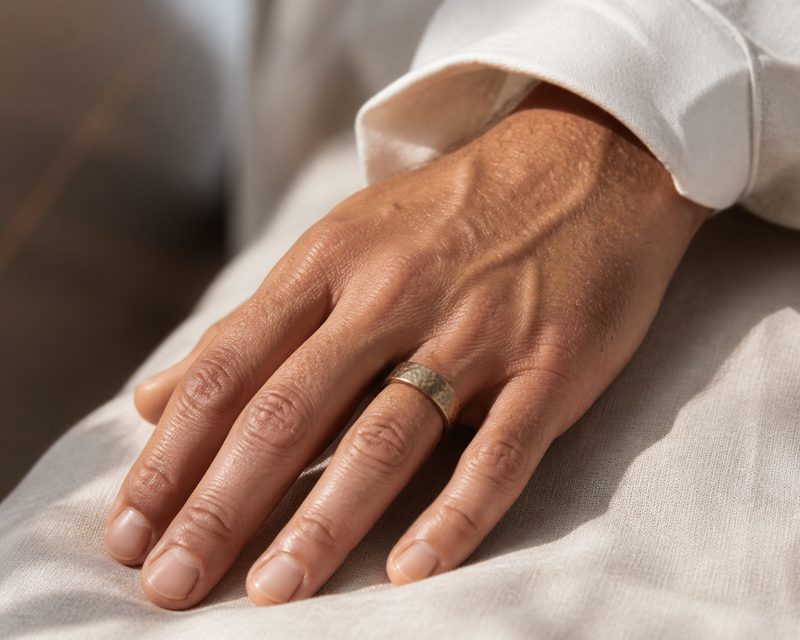

Engagement Rings for Men NZ: The Complete Buying Guide

Engagement rings for men are no longer a rarity in New Zealand. Couples from Auckland to Christchurch are choosing to mark their commitment with rings for both partners, and Kiwi jewellers have responded with a much wider range of styles, metals and price points than even five years ago. If you are shopping for a men’s engagement ring in NZ, this guide walks through what to look for, what each metal actually does on the hand, and how to land on a ring that suits daily life here.
Throughout this article, prices are quoted in NZD and include GST. Delivery is free across New Zealand, including rural addresses, on orders from Men’s Rings Online NZ.
Why More Kiwi Men Are Wearing Engagement Rings
The idea of a man wearing an engagement ring is not new, but acceptance in New Zealand has grown sharply over the last decade. Same-sex marriage has been legal here since 2013, and that legal shift accelerated a broader cultural one: engagement is now seen as a shared milestone rather than a one-sided gesture. Many opposite-sex couples are following the same logic, with both partners wearing a ring during the engagement period.
There are practical reasons too. A lot of Kiwi men travel for work, spend time on building sites, in workshops or on the water, and want something visible that signals they are committed. A simple band on the left ring finger does that job without much fuss.
What an Engagement Ring Means in This Context
For men, an engagement ring usually serves one of two purposes. Either it sits on the finger until the wedding day and is then replaced or stacked with a wedding band, or it doubles as the wedding ring from the outset. Both approaches are common in NZ and neither is more correct than the other. The decision usually comes down to budget, style preference, and whether the couple wants a clear visual distinction between the two stages.
Choosing the Right Metal for New Zealand Conditions
Metal choice matters more than most first-time buyers expect. New Zealand’s climate ranges from humid Northland summers to cold, salty coastal air in Wellington and the South Island, and your ring needs to cope with all of it. Here is how the main options actually behave.
Tungsten Carbide
Tungsten is the most scratch-resistant option in this price bracket. It holds a mirror polish for years, does not corrode, and shrugs off the kind of knocks that mark softer metals within weeks. The trade-off is that tungsten cannot be resized, so sizing has to be right the first time. It is also brittle under sharp impact, which is actually a safety feature for tradies because the ring will crack off rather than degloving the finger. Browse the full tungsten rings range to see the styles available.
Titanium
Titanium is lighter than tungsten by a noticeable margin, hypoallergenic, and very corrosion-resistant. It suits men who find tungsten too heavy or who react to nickel in cheaper alloys. It scratches more easily than tungsten but can be refinished. See current titanium rings for examples across plain and inlaid styles.
Gold
Gold remains the traditional choice and still accounts for a strong share of engagement rings sold in NZ. 9ct is harder and more affordable; 18ct has richer colour and feels more substantial. Yellow, white and rose are all readily available. Gold is resizable, repairable, and ages well, but it does scratch, so expect a softer matte patina over time unless you have it repolished. The gold rings for men collection covers all three colours.
Platinum
Platinum is denser than gold, naturally white, and holds gemstones securely. It is the most expensive of the mainstream metals but also the most durable in terms of metal loss — scratches displace rather than remove material, so a platinum ring at 20 years still weighs almost what it did new. The platinum men’s rings range covers brushed, polished and hammered finishes.
Silicone
Silicone is the practical second ring. Plenty of Kiwi men buy a metal engagement ring for everyday and a silicone ring for the gym, the surf, the kayak or the workshop. They cost very little, come in any colour, and remove the risk of catching a metal band on machinery or rigging.
Wood and Carbon Fibre
If you want something that does not look like every other ring on the bench, inlaid wood or carbon fibre rings offer real visual difference without a huge price jump. Wood inlays are sealed and durable enough for daily wear, though we generally recommend a metal core for structural strength.
NZ Ring Sizing Made Simple
New Zealand uses the same alphabetical sizing system as Australia and the UK, running from A through to Z with half sizes available. This is different from the numerical US system. Most Kiwi men sit somewhere between R and Z. If you are buying as a surprise, the safest options are to borrow a ring he already wears on the correct finger, or to ask a jeweller for a sizing kit.
For accurate at-home measurement, see the NZ men’s ring size guide. A few practical points worth knowing:
- Fingers swell in summer humidity and shrink in cold weather. Measure mid-morning at a moderate temperature.
- Wider bands (8mm+) fit tighter than narrow ones at the same numerical size, so size up half a letter for wide rings.
- Knuckles matter. If the knuckle is much bigger than the base of the finger, size to the knuckle and accept some looseness at the base.
Setting a Budget That Actually Makes Sense
The old “three months’ salary” rule was a marketing line from the 1940s and bears no relationship to what Kiwi couples actually spend. A realistic range for a men’s engagement ring in NZ:
- Under $300 NZD — silicone, basic tungsten, simple titanium bands.
- $300–$800 NZD — quality tungsten and titanium with inlays, entry-level 9ct gold bands.
- $800–$2,500 NZD — 9ct and 18ct gold with detail work, plain platinum.
- $2,500+ NZD — platinum with stones, heavier 18ct gold, custom work.
None of these tiers is more or less meaningful than another. Spend what fits the rest of the wedding budget and the lifestyle the ring has to live with.
Matching the Ring to His Lifestyle
Walk through a normal week before you choose. A site supervisor in Hamilton, a software engineer in Wellington, and a kayak instructor in Nelson all need different things from a ring.
Trades and Manual Work
Tungsten or titanium with a low profile. Avoid raised stones. Keep a silicone backup for jobs where catching the ring could be dangerous.
Office and Desk Work
Almost anything works. Gold and platinum show their best in this context because there is less daily abrasion. If he types a lot, a comfort-fit interior (rounded inside edge) makes long days easier.
Outdoor and Sport
Lightweight titanium or silicone. Salt water is fine on titanium, tungsten and platinum, but gold should be rinsed in fresh water after a swim, especially on the Coromandel and East Coast where there is more abrasive sand.
Style Categories Worth Knowing
Beyond metal, the look of the ring matters. A few categories cover most of what NZ buyers actually choose:
- Plain bands — classic, low maintenance, easy to stack with a wedding band later.
- Brushed or matte finishes — hide micro-scratches better than mirror polish.
- Inlay rings — wood, carbon fibre, or contrasting metal stripes for visual interest without stones.
- Stone-set — a single flush-set diamond or black stone is common; raised solitaires are uncommon on men’s rings here.
- Signet and pinky rings — worn on the little finger, often family-related, sometimes used as engagement rings in lieu of a left-hand band.
Delivery, Returns and Aftercare in NZ
Men’s Rings Online delivers free across New Zealand, including rural addresses, with no minimum spend. Most orders ship from local stock within one to two working days, and rural delivery typically adds one to two days on top of standard courier times. All pricing is GST inclusive.
For aftercare, the basics are simple. Rinse the ring in warm water with a drop of dish soap every couple of weeks, dry with a soft cloth, and store it in the box when not worn. Gold and platinum can be repolished by any jeweller. Tungsten and ceramic generally cannot be repolished but rarely need to be.
When to Buy
Lead time matters. Standard sizes in tungsten, titanium and silicone usually ship within a few days. Gold and platinum often involve a sizing or finishing step and can take two to three weeks. Custom engraving adds another few days. If there is a proposal date in mind, work backwards from there and add a buffer for rural delivery if you are not in a main centre.
For couples buying together, the men’s wedding rings collection often overlaps with engagement-ring choices, especially where the engagement ring is intended to serve as the wedding band too.
Common questions
Do men in New Zealand actually wear engagement rings?
Yes, and increasingly so. Same-sex marriage has been legal in NZ since 2013, and many opposite-sex couples now also choose engagement rings for both partners. It is no longer unusual to see a man wearing a band before the wedding.
What NZ ring size is most common for men?
Most Kiwi men fall between sizes R and Z on the NZ/AU/UK alphabetical scale. The most common single size is around T to V. If you are unsure, borrow a ring he already wears or use a sizing guide before ordering.
Is delivery free across New Zealand?
Yes. Men's Rings Online ships free to every NZ address, including rural delivery, with no minimum spend. Standard delivery to main centres is usually one to three working days, with rural addresses adding another day or two.
Can tungsten or titanium rings be resized?
Tungsten and titanium cannot be resized in the way gold or platinum can. If the size changes significantly, the ring needs to be replaced. Most retailers, including ours, offer a sizing exchange within a set period so you can swap to the correct size.
Is the price GST inclusive?
Yes. All prices on Men's Rings Online NZ are quoted in New Zealand dollars and include GST. The price you see at checkout is the price you pay, with no separate tax added at the end.
Shop engagement-ring styles: browse the live men’s engagement rings collection for available materials, widths and sizing. This guide explains the decision; the collection is where to compare current rings.