
Ring Profile Shapes Explained: Dome, Flat Court, and Comfort Court for Men’s Wedding Bands

What a Ring Profile Actually Is
Ask most blokes what shape their wedding ring is and they’ll describe the metal or the width. Ask about the profile and you’ll usually get a blank look. Fair enough, it’s not a word that comes up much outside a jeweller’s workshop. The profile is simply the cross-section of the band, the shape you’d see if you sliced straight through it like a bagel. Stand a ring on its side and look at the edge on, and that curve (or lack of one) is the profile.
It matters more than most guys expect. Two rings can be the exact same width, say 8mm, same metal, same finish, and feel completely different on the hand because one is domed and the other is flat. We see this constantly at Men’s Rings Online, where a customer swaps from a flat profile to a comfort court in the same width and tells us it feels “half the size.” It isn’t smaller. It just distributes weight and pressure differently across the knuckle and the base of the finger.
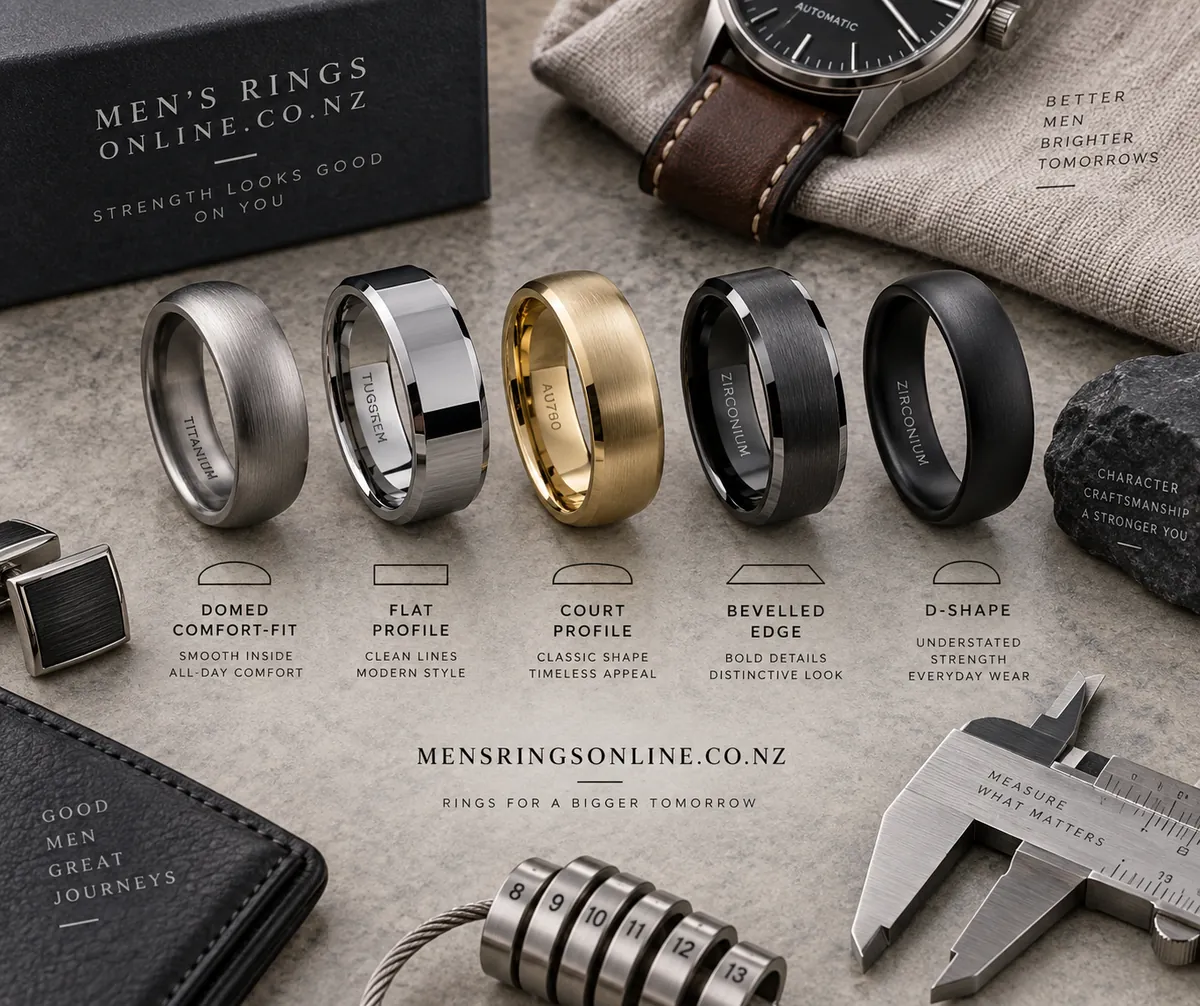
The three profiles that come up again and again in men’s wedding bands are dome (also called D-shape), flat court, and comfort court. Each one has a distinct silhouette and a distinct feel, and none of them is objectively “better.” It comes down to your knuckle size, how wide a band you’re after, and honestly, how much ring you actually want to feel on your hand all day.
How to Choose the Right Profile
Start with your knuckle, not the catalogue photo. If you’ve got larger knuckles relative to the base of your finger, a flat court or comfort court profile will usually slide on and off easier than a full dome, because there’s less bulk at the widest point of the curve. Guys with slimmer, more even fingers tend to get away with any of the three without much difference.
Next, think about width. A 4mm or 5mm band in a dome profile feels genuinely comfortable for most people because there’s simply not much surface area involved. Push that same dome shape out to 9mm or 10mm and the curve starts to feel like it’s pressing into the sides of your finger when you make a fist. That’s when a lot of our customers shopping the wider end of the range, particularly in titanium bands or carbon fibre rings, switch to a comfort court instead.
Then there’s the job factor, and this one gets overlooked constantly. If you’re a tradie, a mechanic, or you work with your hands doing anything repetitive, a lower-profile flat court sits less proud of the finger and catches on gloves, tools, and machinery less often. Office-based guys who barely notice their ring during the day have more flexibility to go with a fuller dome if that’s the look they want. It’s worth being honest with yourself here rather than picking based on the photo alone.
Finally, factor in what you’re pairing the band with. If your partner’s engagement ring sits close to the hand, a slimmer, lower profile on your side often reads as a better visual match at the ceremony, even though nobody’s actually comparing profiles at the altar. It’s a small detail, but it’s one we get asked about often enough that it’s worth mentioning.
Top Profile Styles and Options
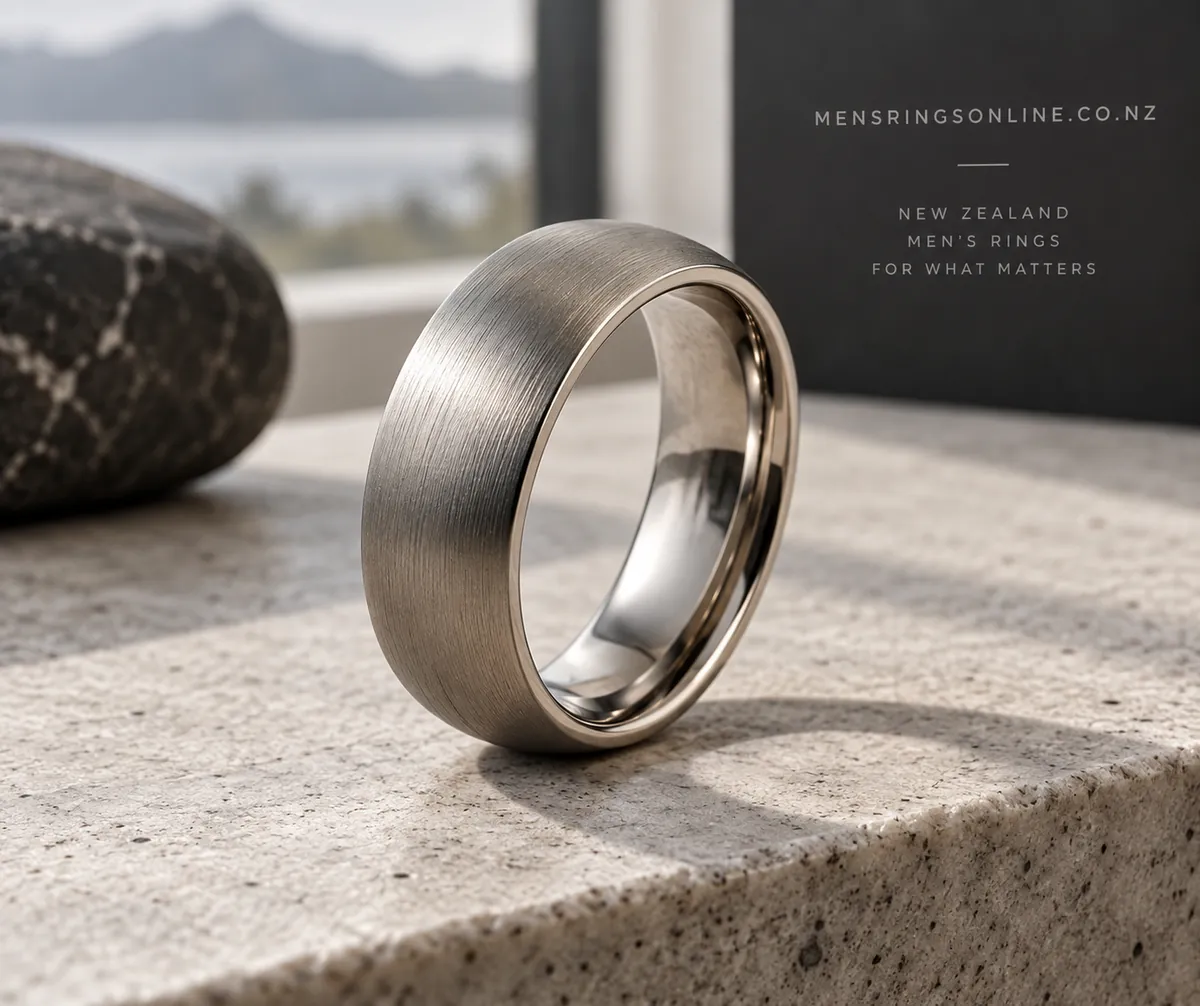
Dome (D-shape). This is the profile most people picture when they think “wedding ring.” The outer edge curves in a full, rounded arc from one side to the other, like a capital D turned on its side. It’s a classic, substantial look that reads well in tungsten and titanium especially, and it’s the profile we see most often on our black ring range, where the rounded shape catches light nicely along the curve. The trade-off is that a full dome sits higher off the finger, so at wider widths it can feel bulkier during activity.
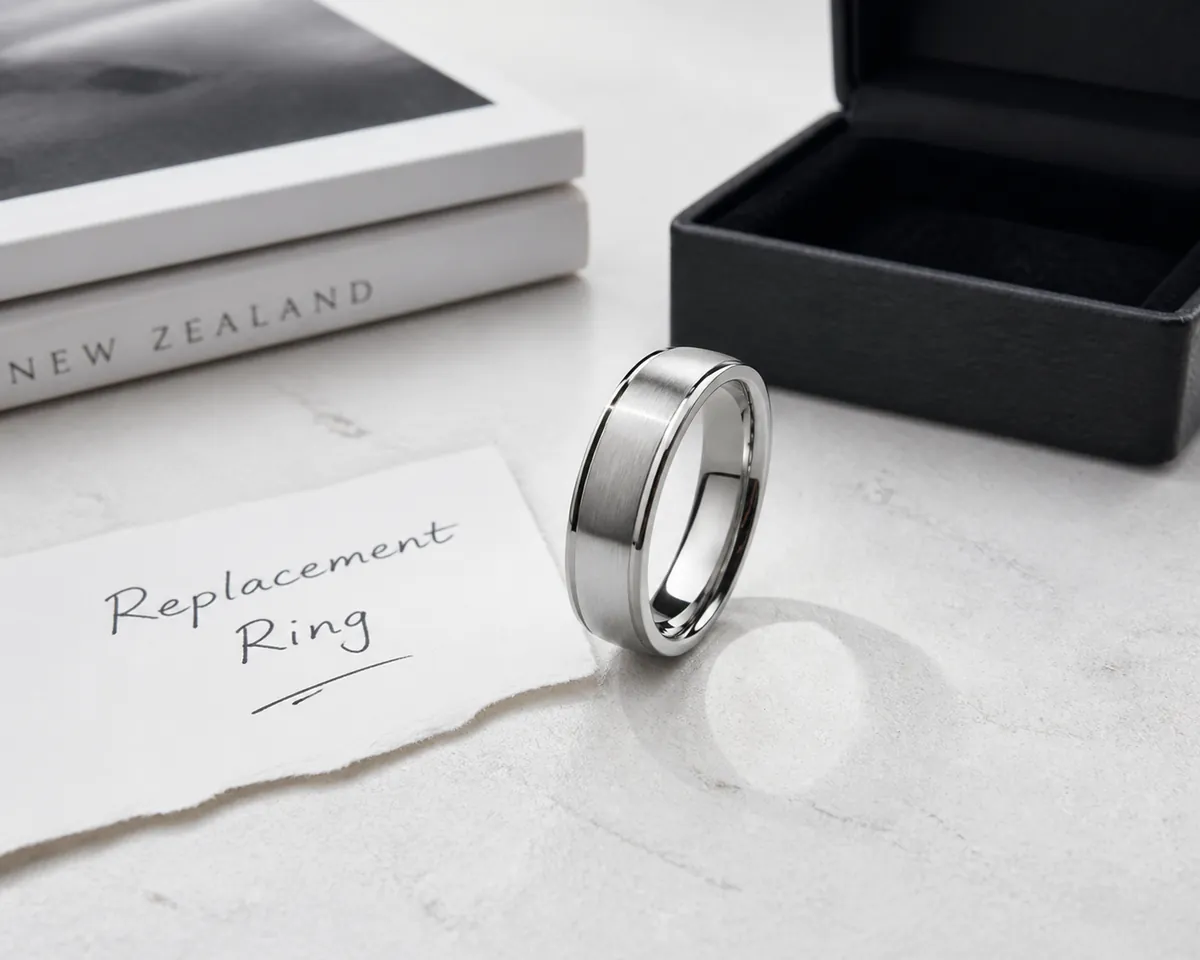
Flat court. Picture a flat top surface with the edges gently rounded off rather than left sharp. It’s lower profile than a dome, sits closer to the finger, and has a more contemporary, tailored look. This is a popular choice for guys who want something understated, and it works particularly well in ceramic and brushed-finish metals where the flat top shows off a matte or satin texture cleanly. It’s also the easiest profile to engrave, since there’s a flat surface to work with on the inside.
Comfort court (comfort fit). This one is less about the outer shape and more about what’s happening on the inside of the band. A comfort court ring has a gentle inward curve on the interior surface, so instead of a flat inner edge meeting your finger, you get a smooth dome that rolls with your knuckle as the ring goes on and off. It’s the profile we recommend most often for guys buying their first metal band, especially if they’ve only ever worn silicone rings before and aren’t used to the feel of a rigid band. The outer shape can still be domed or flat court, so comfort fit is really an add-on you combine with the other two rather than a fourth separate option, though it’s marketed as its own style often enough that it’s worth listing here.
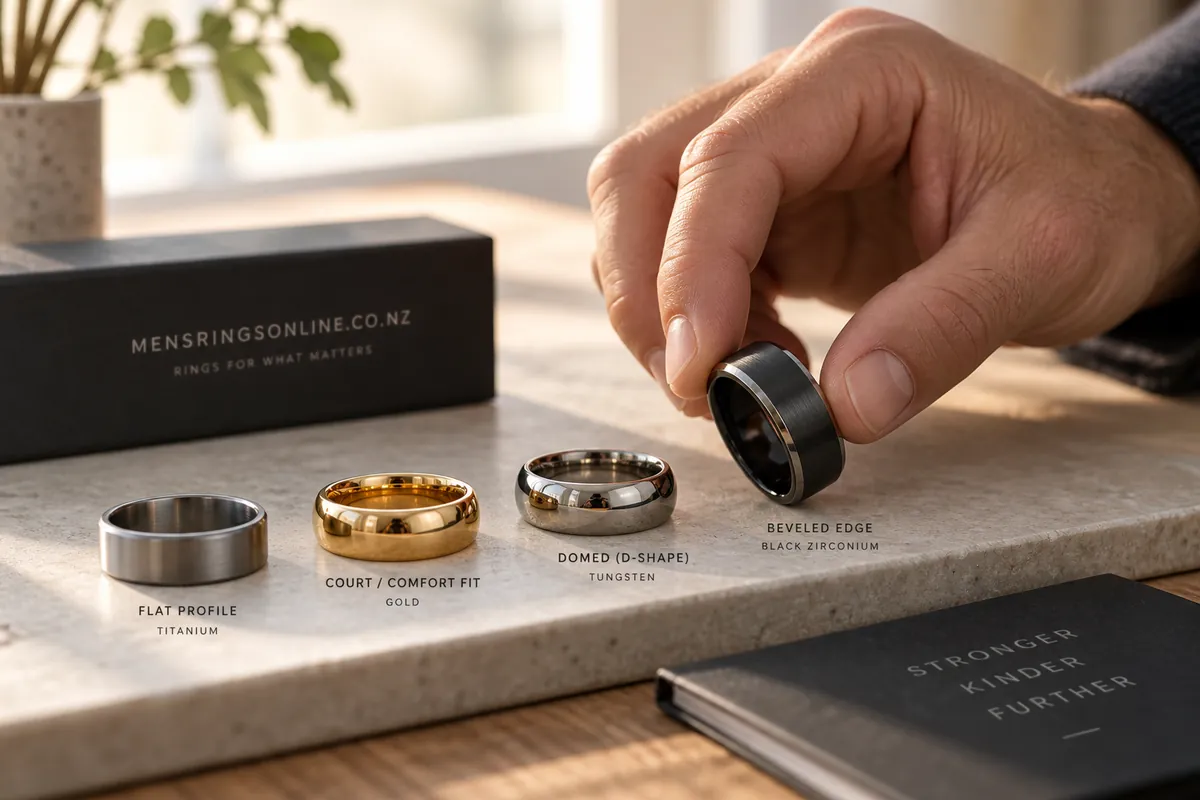
A few other profiles show up occasionally worth a quick mention. A knife-edge profile has a sharp ridge running down the centre of the band, tapering off to thinner edges, giving a more angular, modern look, though it’s less common in men’s tungsten and titanium because the ridge can wear down faster on harder metals. A flat profile with no rounding at all (sometimes called a court-less flat) is popular in gold wedding bands for a minimalist, architectural look, but it’s rare in tungsten since the sharp square edges are harder to machine cleanly and more prone to chipping on the corners.
What to Consider Before You Buy
Sizing works differently across profiles, and this catches people out more than anything else on this list. A comfort court ring in a given size will typically fit slightly looser than a flat court in the same stated size, because the curved interior takes up less room across the knuckle. If you’re ordering online, check the sizing guide for the specific profile rather than assuming your usual size carries across, and when in doubt, size up a fraction rather than down. A ring that’s tight over the knuckle in a showroom in air conditioning gets a lot tighter on a 32-degree day in January.
Width and profile interact more than you’d think. We mentioned it above, but it bears repeating: the wider the band, the more the profile shape affects comfort. A 4mm flat court and a 4mm dome feel fairly close. A 10mm flat court and a 10mm dome feel like two different rings entirely. If you’re set on a wider band for the look, lean towards flat court or comfort court rather than a full dome to keep it wearable day to day.
Material changes how forgiving the edges feel too. Tungsten carbide is a hard metal and holds its polished edges well, so a flat court in tungsten stays crisp for years. Titanium is lighter and slightly softer, so edges on a titanium flat court round off marginally over time with wear, which some guys actually prefer since it becomes more comfortable the longer they own it. If you’re after something with more colour flexibility, a blue silicone ring or one of the bronze silicone options sidesteps the whole profile question, since silicone bands flex rather than hold a rigid cross-section, though they’re a different category entirely to a permanent metal band.
Resizing is worth asking about before you commit, particularly with tungsten and ceramic, which can’t be resized the way gold or platinum can because they’re too hard to stretch or compress without cracking. If there’s any chance your finger size will change (weight fluctuation, manual labour building up your hands, whatever it is) a resizable metal or a slightly looser comfort court fit gives you more room to move than a snug flat court in a non-resizable material.
Tips From the Experts
Try before you commit if you possibly can, even if that just means trying on a similarly profiled ring in a local jewellery shop before ordering your actual band online. The difference between dome and flat court is genuinely hard to picture from a product photo, and five minutes with a sample ring on your hand tells you more than any spec sheet.
Don’t assume comfort court means “soft” or less durable. The inner curve is a shape decision, not a material one. A comfort court tungsten ring is exactly as hard and scratch-resistant as a flat court tungsten ring in the same finish; the comfort element only affects the fit against your skin.
If you wear your ring for physical work, ask about a lower-profile option regardless of which shape you land on. Flat court with a comfort inner edge tends to be the practical sweet spot for tradies and anyone working with machinery, since it minimises how far the band sits proud of your finger while still feeling smooth on the inside.
Match your profile to your partner’s ring where it makes sense, but don’t over-think it. Coordinated doesn’t mean identical. A domed men’s band and a flat court women’s band in the same metal tone still read as a matching set at the ceremony and in photos.
If you’re after something outside the standard three-profile range, whether that’s a custom taper, an unusual width, or a specific inlay that changes how the profile sits, it’s worth talking through a custom made ring rather than trying to force a stock design to work. We also see plenty of guys pairing a domed tungsten wedding band with a separate diamond ring for everyday wear, which sidesteps the profile debate entirely by keeping the two rings for different occasions. Have a browse through the full blog for more sizing and style guides, or read more about how we approach fit and finish on our about page.
Frequently Asked Questions
What is the best wedding ring profile shape for men?
There’s no single best profile, it depends on your knuckle size and how wide a band you want. Comfort court is the safest all-round pick for first-time metal band wearers, while flat court suits guys who work with their hands and want a lower, more practical shape.
How do I know which profile shape is right for me?
Try on a few samples in person if you can, since photos don’t show how a curve feels against your finger. As a rule of thumb, larger knuckles and wider bands do better with flat court or comfort court, while slimmer fingers and narrower widths suit any of the three profiles equally well.
What should I look for when buying a wedding band?
Check the sizing guide for the specific profile you’re ordering, since comfort court and flat court in the same stated size can fit differently. Also confirm whether the material can be resized later, because tungsten and ceramic generally can’t, while titanium and gold usually can.
Are there budget-friendly profile options for men?
Yes, profile shape itself doesn’t add much to the cost, it’s the metal and width that drive price. A flat court or comfort court tungsten band gives you the comfort benefits of a more expensive setup without the higher price tag of precious metals like gold.