
Wedding Ring Shopping Timeline: How Far in Advance Should Kiwi Grooms Buy?

Why Ring Timing Matters
Here’s the thing nobody tells grooms until it’s nearly too late: a wedding ring isn’t a same-day purchase, even when it feels like it should be. You can buy a shirt off the rack in ten minutes. A ring, especially one you’re going to wear every day for the next fifty years, usually needs sizing, sometimes engraving, and occasionally a full custom build. Every one of those steps eats calendar days.
We see the same pattern every wedding season. A groom rocks up three weeks out, having spent zero minutes thinking about his own ring while he helped pick out the venue, the suit, and half the flower arrangements. Suddenly he needs a size 11 in brushed titanium with a single groove, and it’s not sitting in a drawer waiting for him. If that’s a custom order, three weeks is genuinely tight. If it’s a stock silicone band, it’s a Tuesday.
The other reason timing matters is less obvious: pricing and stock. Popular sizes (10, 11, and 12 for men) sell out faster than the outliers, and if you’re chasing a specific finish, colour, or width, waiting until the last minute narrows your options rather than widening them. Shopping early means you’re picking from the full range, not whatever happens to still be in the warehouse.
Building Your Own Timeline
Forget generic advice that says “buy your ring six months out” as if every groom and every ring are the same. The honest answer is that your timeline depends on three things: what the ring is made of, whether it needs engraving, and how confident you already are about your size.
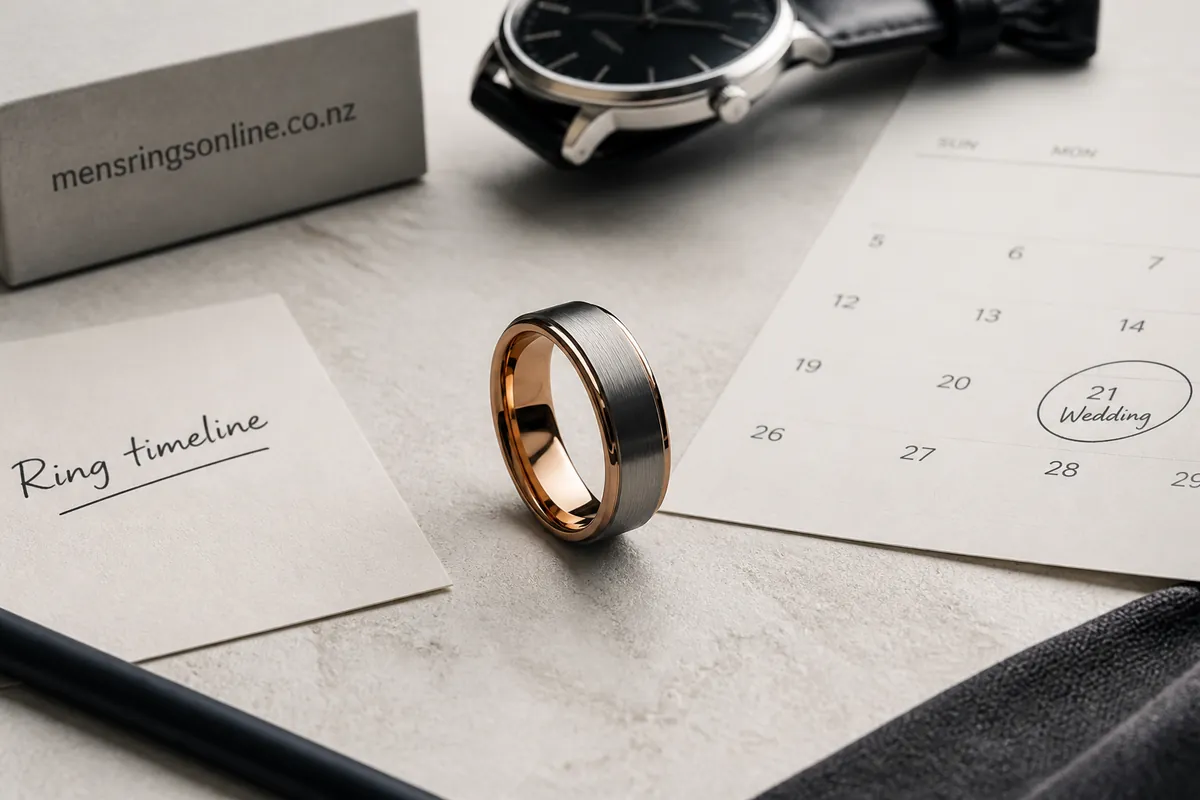
Start by working backwards from the wedding date. If you’re getting married in six months, you’ve got plenty of breathing room to browse, get sized properly, order, and still have a buffer for the inevitable “actually, can we swap the finish” moment. If you’re inside eight weeks, you need to start narrowing your options today, not next month.
A rough breakdown that’s worked for hundreds of Kiwi grooms we’ve helped over the years:
4 to 6 months out: Ideal window. Browse styles at your own pace, get properly sized (don’t guess, more on that below), and if you want something custom made, this is when you start those conversations.
2 to 3 months out: Still comfortable. Most ready-made rings in tungsten, titanium, or black zirconium ship within days, and even a moderately customised piece has time to be built and adjusted if needed.
3 to 4 weeks out: Getting tighter but workable for anything off the standard range. This is where you rule out heavily bespoke pieces and stick to what’s actually in stock.
Under 2 weeks out: Silicone or a simple stock band only. Anyone promising a fully custom gold ring in this window is either very lucky with stock or not being straight with you.
The mistake most grooms make isn’t leaving it late exactly, it’s not knowing which bucket their ring choice falls into until they’ve already run out of time to change plans.
Timelines by Ring Material
Not all rings are built the same way, and that changes how long you need. Here’s how the popular options actually break down in terms of lead time.
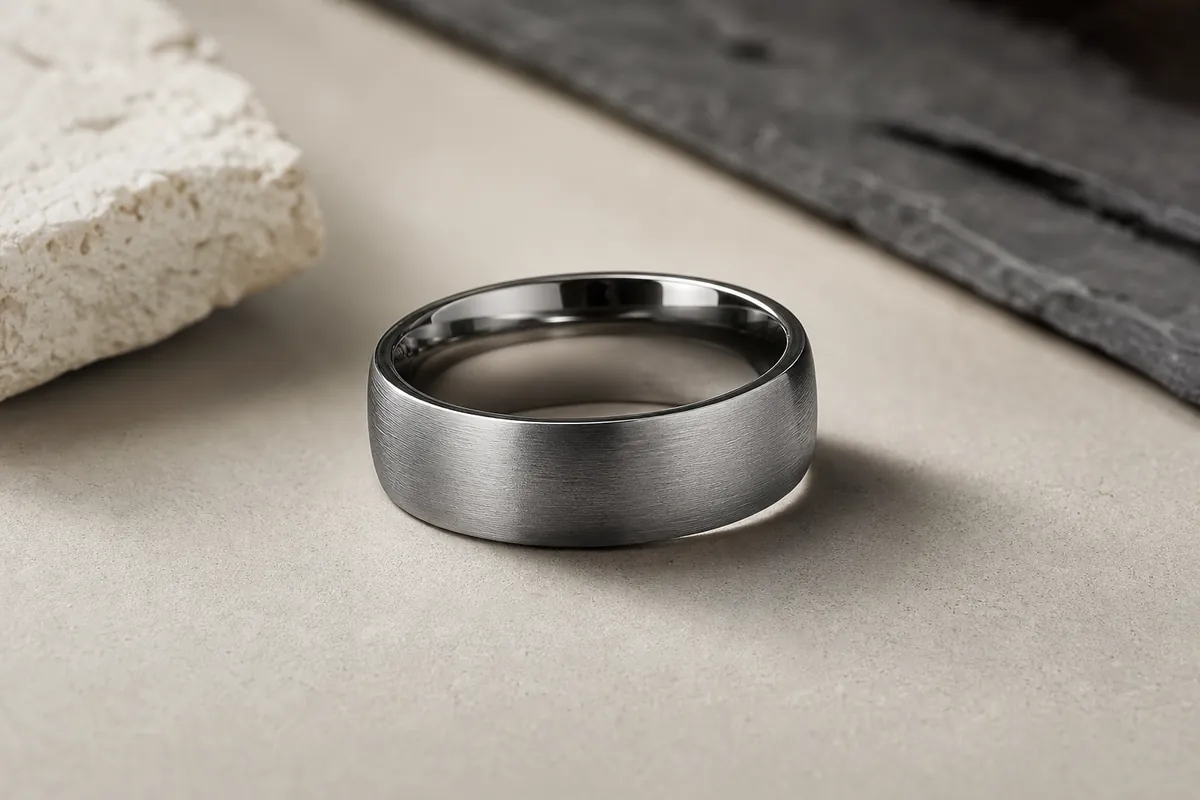
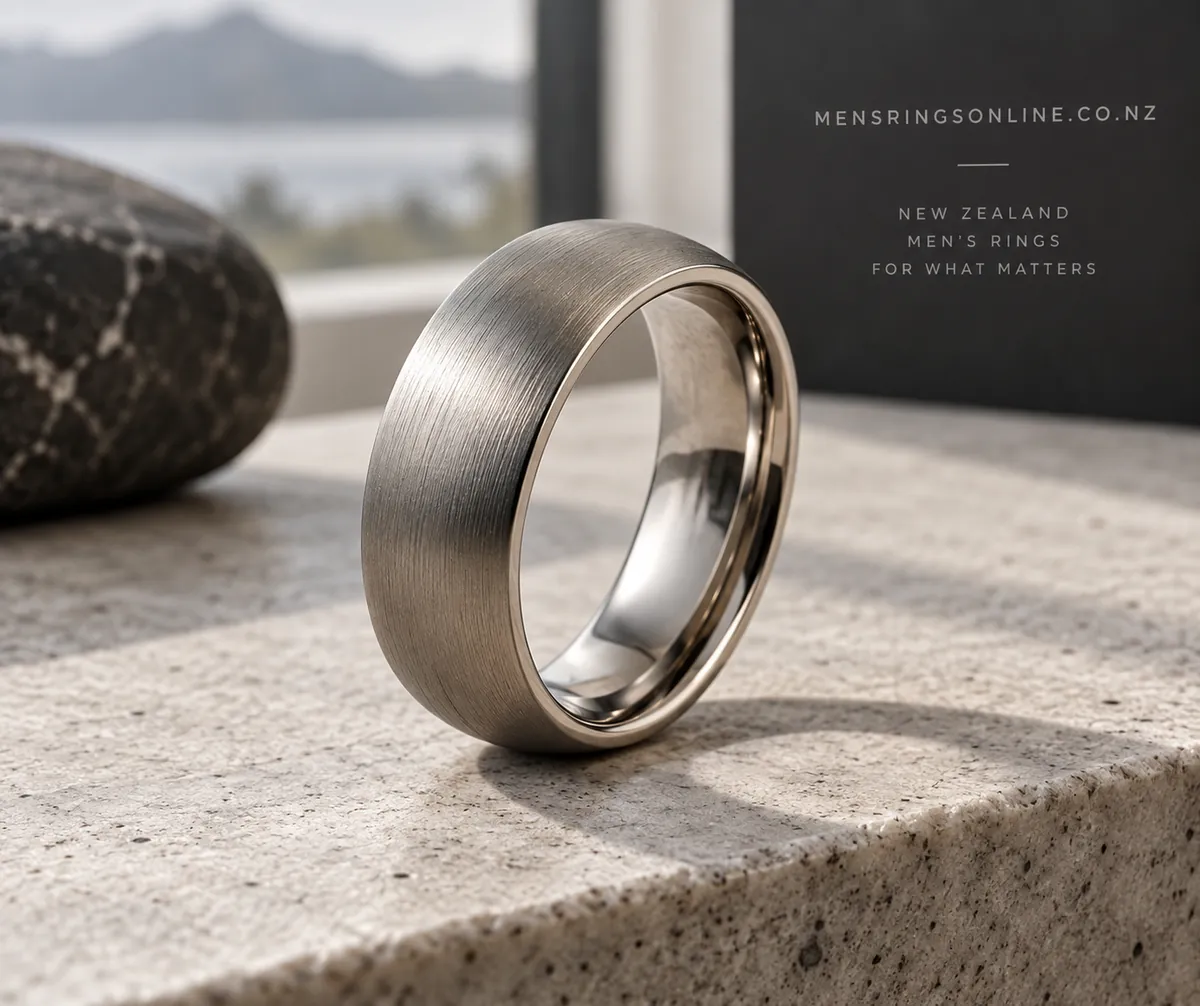
Tungsten and titanium. These are the workhorses of the men’s ring world and, thankfully, also the fastest to get right. Most tungsten and titanium rings ship pre-made in standard sizes, so unless you’re after a custom engraving or a non-standard width, you’re looking at days rather than weeks. If you do want something built to your own spec, add at least 2 to 3 weeks.
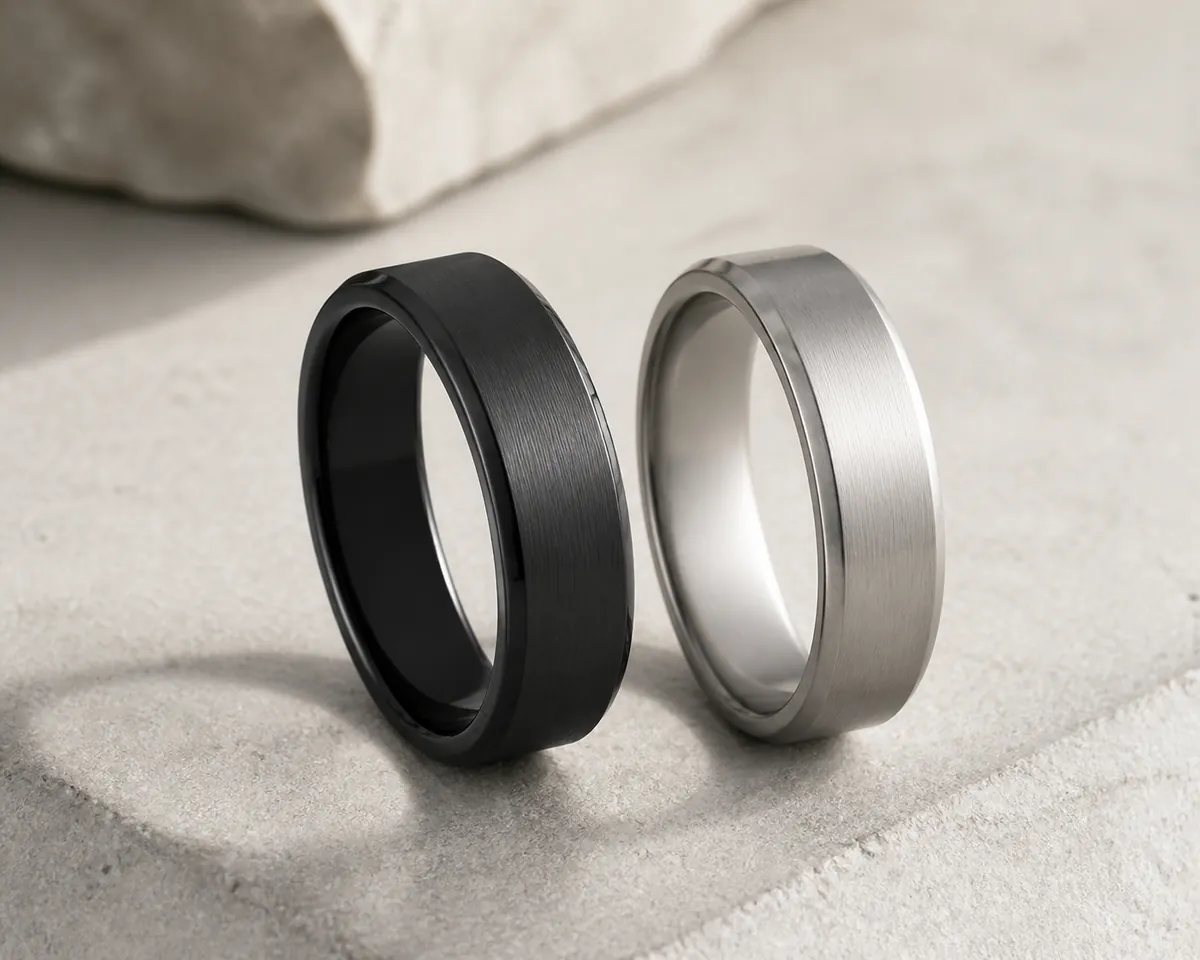
Black zirconium and ceramic. Similar story to titanium for anything off the shelf. Black rings in zirconium have become one of the most requested styles we sell, largely because the colour doesn’t fade or scratch through to a different metal underneath the way plated finishes can. Stock sizes move quickly, so if you’ve got your heart set on a particular width, don’t leave it to the last fortnight of wedding season.
Carbon fibre. Genuinely one of the fastest categories to buy. Carbon fibre rings are lightweight, durable, and almost always sold in ready-to-ship sizes, which makes them a solid pick if your wedding date snuck up on you.
Silicone. The fastest option, full stop. If you’re a tradie, in the gym a lot, or just want a practical everyday band separate from a dressier ring, black silicone, blue silicone, brown, and bronze silicone rings can be ordered and worn within a week. No sizing dramas, no engraving wait, just pick a colour and go.
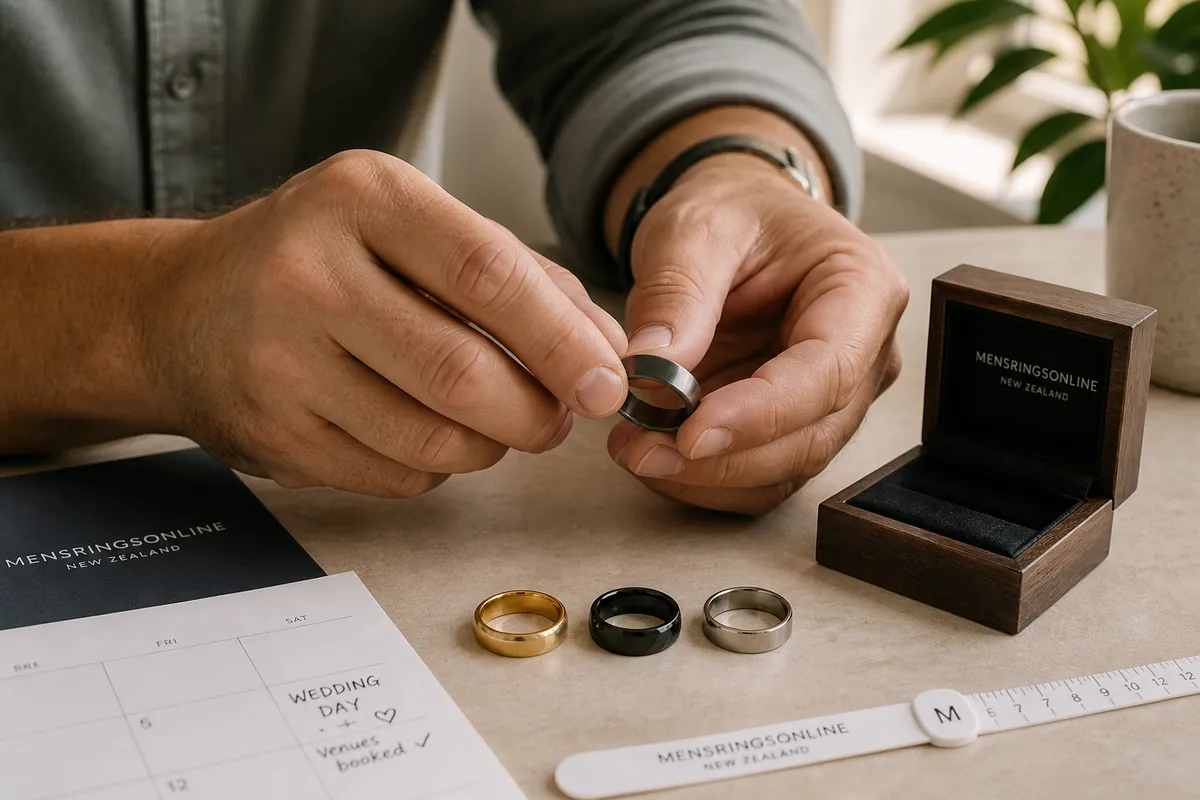
Gold and diamond-set rings. This is where you genuinely need to plan ahead. Gold rings for men and diamond rings for men often involve casting, stone setting, and hallmarking, all of which take real time. Budget at least 6 to 8 weeks for these, longer if you’re after a specific carat or stone shape that needs sourcing.
Custom made pieces. If you want a ring that doesn’t exist anywhere else, whether that’s a combination finish, an inlay, or a design pulled from a sketch, go through custom made rings and start the conversation as early as you can. Design, quoting, and production for a fully bespoke ring can run 4 to 8 weeks depending on complexity, and that’s before you factor in any back-and-forth on the design itself.
What to Check Before You Buy
A few practical things trip grooms up more than the actual shopping does.
Get sized properly, not by guesswork. Ring size can shift by half a size or more depending on temperature, time of day, and whether you’ve been on your feet all day. Get measured at a jeweller if you can, or order a proper ring sizer rather than eyeballing it against an old ring. Consumer NZ’s guidance on jewellery purchases is worth a read if you want the full rundown on what to check before you commit to a size or a retailer.
Factor in engraving time. A lot of grooms want a date, initials, or a short message engraved inside the band. That’s usually quick, a few extra days at most, but it does need to happen after the ring’s been finalised, not before, so build it into your buffer rather than assuming it’s instant.
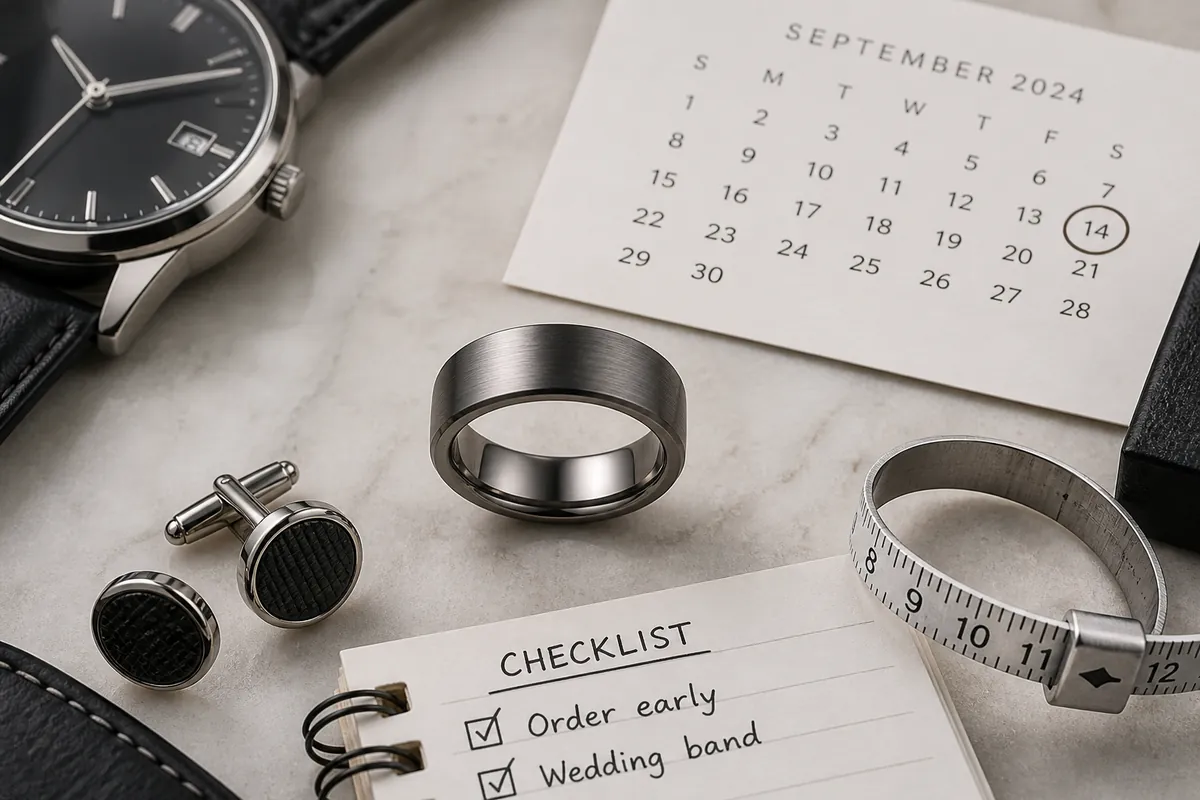
Think about how the ring pairs with the rest of the day. If you’re also sorting cufflinks or other accessories for the ceremony, it’s worth ordering them together so the finishes match and you’re not doing three separate freight waits in the final week.
Have a backup plan for delays. Courier delays happen, particularly around peak wedding months (spring and early autumn in New Zealand) when everyone’s ordering at once. If your date is firm, order with at least a week of slack built in beyond the promised delivery window.
Check the return and resize policy before you pay. Weight fluctuates, especially in the run-up to a wedding when diets and gym routines change. Knowing you can get a free or low-cost resize after the big day takes the pressure off getting it perfect on the first try. The Knot’s ring-buying guide covers this from a US perspective but the underlying advice about resize policies translates directly.
Tips From the Trade
A handful of things we tell every groom who asks us this exact question.
First, don’t buy your ring in isolation from your partner’s. Even if you’re not matching materials, it’s worth at least glancing at what they’ve chosen so the two rings don’t clash badly when they’re photographed side by side for the next fifty years of anniversaries.
Second, if you’re torn between two materials, lean towards the one that suits your actual daily life rather than the one that looks best in a product photo. A tradie who works with their hands all day is going to get more use out of a scratch-resistant ceramic ring or a silicone band than a soft gold one that dents on the first day on site.
Third, order a size up in confidence, not in ring size. If you’re between two sizes, most jewellers will tell you to size up slightly since a ring that’s a touch loose is more comfortable long-term than one that’s tight, and it’s easier to resize down than up on most metals.
Fourth, keep the receipt and any warranty documentation somewhere you’ll actually find it again. Six months after the wedding is not when you want to be searching your inbox for a purchase confirmation because the ring needs a clean or a resize.
Finally, if you’re still not sure what you’re after, browse the full range at Mens Rings Online before narrowing down, and check the blog for style comparisons if you want more detail on any particular material. Reading a few real reviews from other Kiwi couples, the kind Brides’ editorial team pulls together in their own men’s ring guides, can also help settle a decision you’ve been going back and forth on.
Frequently Asked Questions
When should I buy my wedding ring in NZ?
Most grooms should start shopping 3 to 4 months before the wedding, which covers sizing, shipping, and any engraving without pressure. If you want a custom or gold build, push that out to 6 to 8 weeks minimum, while a ready-made silicone or carbon fibre band can be sorted in under a week if you’re pressed for time.
How do I know which ring timeline fits me?
It comes down to the material and whether it’s custom or stock. Standard tungsten, titanium, or silicone rings ship fast, while gold, diamond-set, or fully custom pieces need weeks of production time, so match your shopping start date to the category rather than a one-size-fits-all rule.
What should I check before buying a wedding ring?
Get your size measured properly rather than guessed, confirm the resize and return policy, and factor in extra days if you want engraving. It’s also worth checking stock availability early since popular sizes and finishes sell out fastest in peak wedding months.
Are there budget-friendly ring options if I’m short on
Yes, silicone and carbon fibre rings are both affordable and quick to get, often arriving within a week of ordering. They’re a practical choice if you’re up against the clock or just want a durable everyday band without the wait or cost of a custom metal piece.