
Meteorite and Deer Antler Inlay Wedding Rings for NZ Grooms

What Is a Meteorite Inlay Wedding Ring
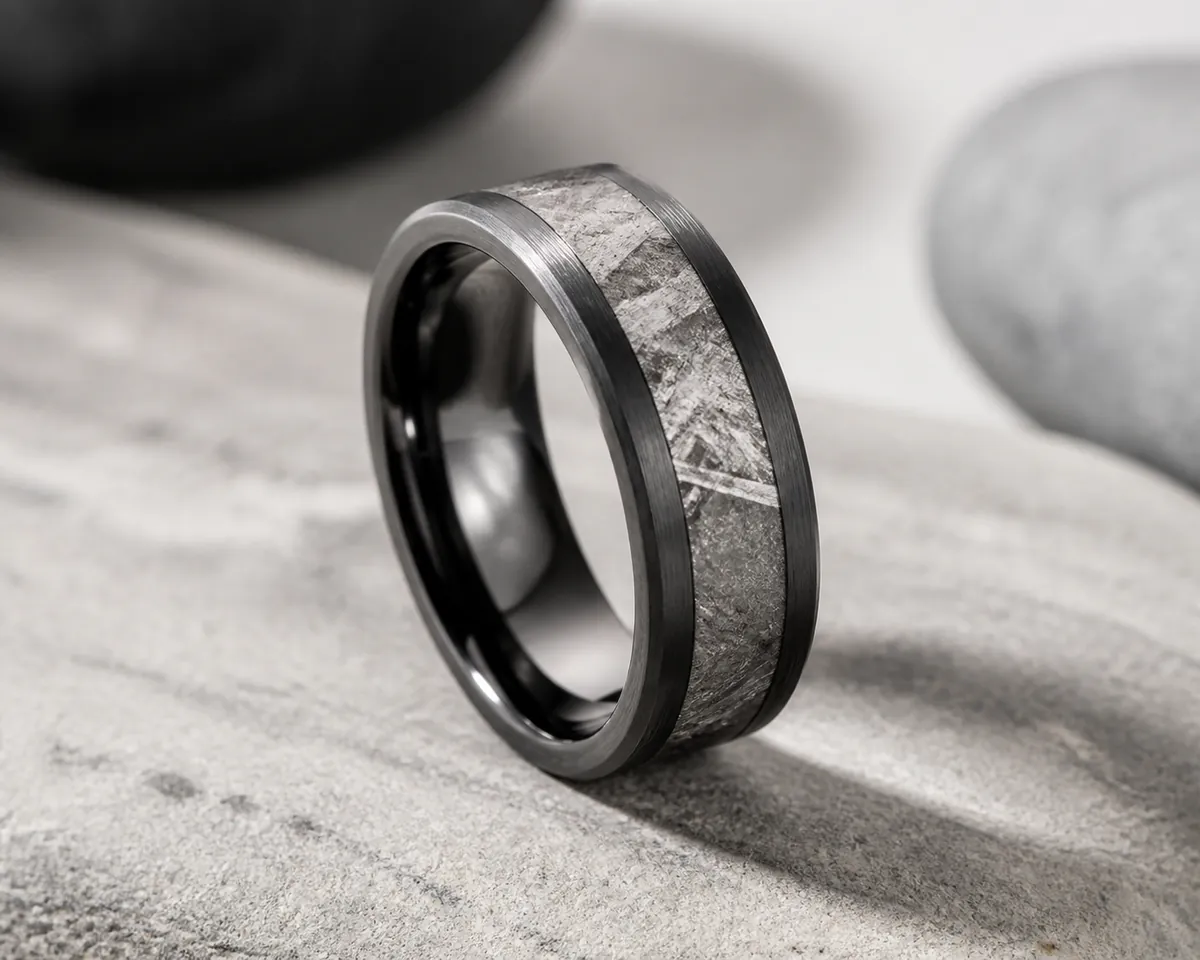
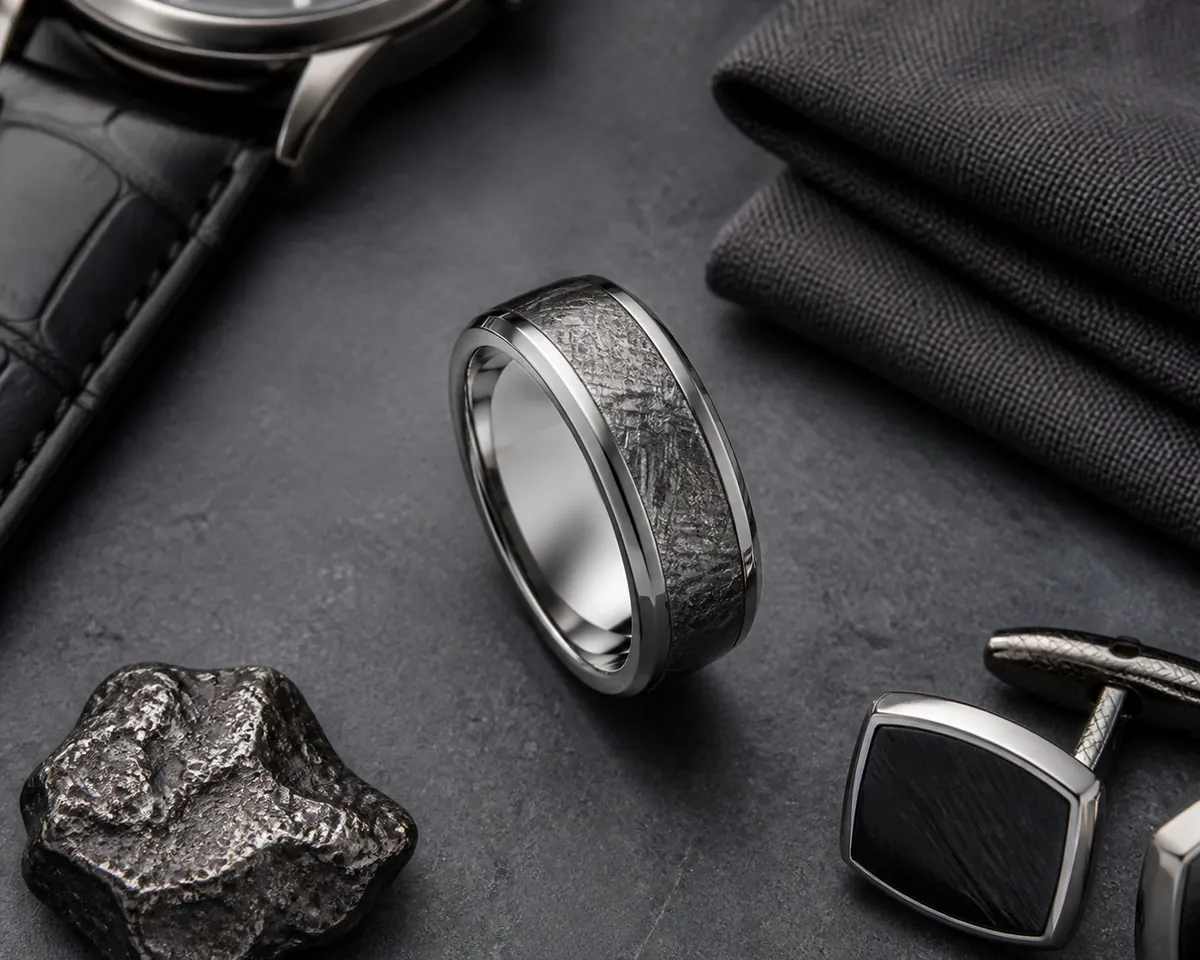
A meteorite inlay wedding ring is exactly what it sounds like: a thin slice of genuine meteorite, usually Gibeon meteorite from Namibia, set into a channel cut around a metal band. Gibeon meteorite is prized because when it’s etched with acid it reveals the Widmanstätten pattern, a crystalline crosshatch that only forms when an iron-nickel alloy cools incredibly slowly inside an asteroid over millions of years. You cannot fake that pattern in a lab. Every slice is different, so no two rings ever look quite the same, which is the whole appeal for grooms who don’t want the same band as the bloke next to them at the pub.
Deer antler inlay works on a similar idea but with a completely different material and story. Antler is naturally shed each year, so a good supplier isn’t harvesting it from a culled animal, they’re collecting sheds off the ground. Once it’s cut, sanded and sealed, it takes on a warm, textured, almost bone-like finish that reads as rugged rather than flashy. For grooms with a hunting background, farming roots, or just a soft spot for the New Zealand bush, an antler inlay band ties the ring to something real rather than something bought off a shelf.
Neither material is strong enough to hold its shape as a full band on its own, so both are almost always set into a sturdier metal core. That’s usually titanium, tungsten, or black zirconium, sometimes with a carbon fibre inner sleeve for extra grip and comfort. If you want something built specifically around your slice of meteorite or antler rather than a stock design, most Kiwi ring makers will do it as a custom made piece, working from your preferred width, profile and metal.
Choosing the Right Meteorite Inlay Ring
Start with the base metal, because that decides how the ring wears day to day, not just how it looks on the wedding photos. Titanium is light, hypoallergenic and takes an inlay channel well, which is why it’s the most common choice for meteorite and antler bands. Tungsten is heavier and scratch-resistant but more brittle, so if you work with your hands a lot, ask specifically how the maker protects the inlay edge on a tungsten core. Black zirconium sits somewhere in between and gives a deep charcoal-black finish that makes a pale meteorite slice really pop against it, similar to the contrast you’ll see across the black rings range.
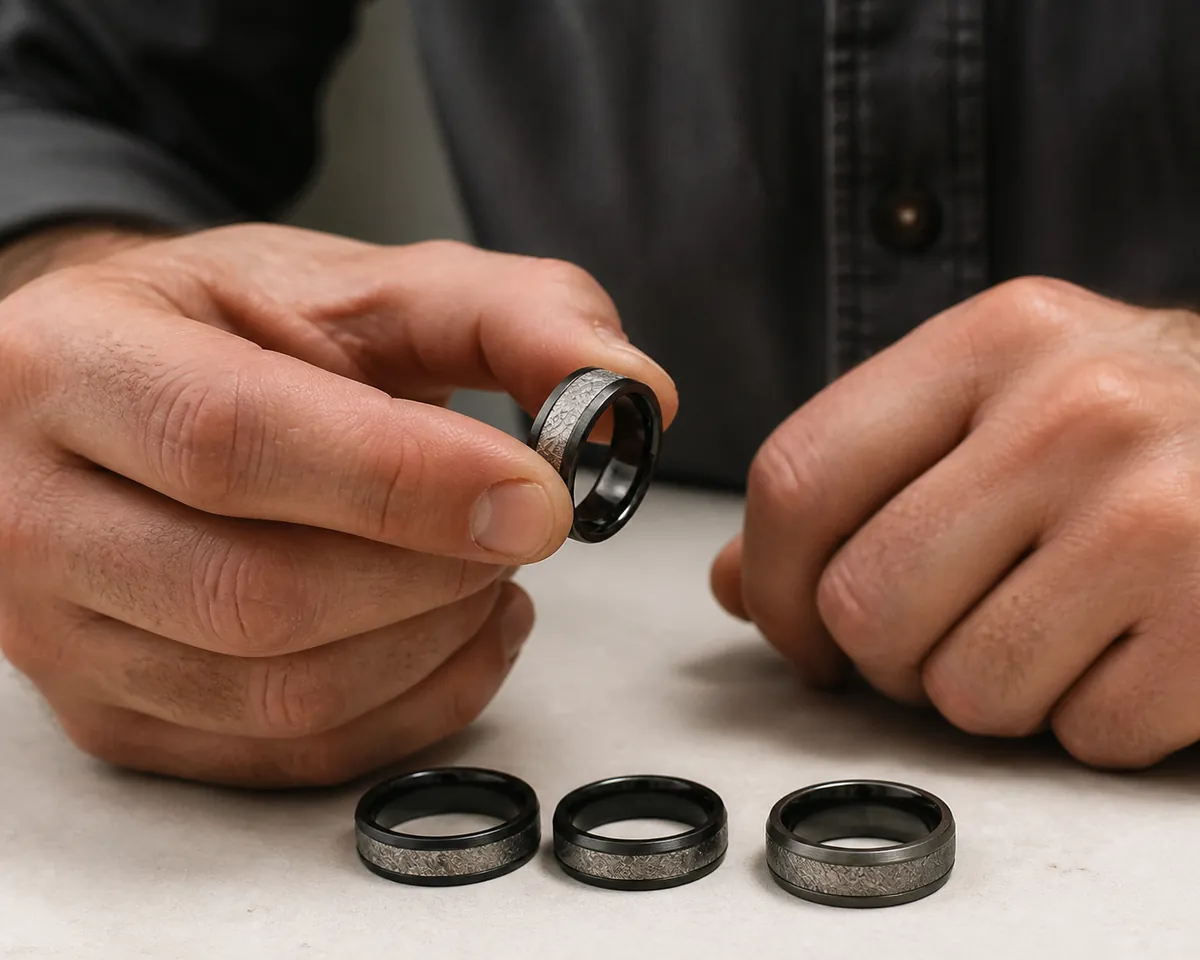
Width and profile matter more than most grooms expect going in. A wide flat band shows off a bigger meteorite window and more of the antler grain, but it can look clunky on smaller hands. A domed 6-8mm profile tends to sit better on most guys and still leaves enough room for a decent inlay strip either as a full band wrap or a single central channel. If you’re not sure, ask your jeweller for a sizing set so you can actually feel the width on your hand rather than guessing from a product photo.
Also think about whether you want meteorite and antler together in the same ring, or as two separate bands for different occasions. Plenty of grooms order a plain, tough everyday ring, sometimes from the ceramic range for scratch resistance on the tools, and keep the meteorite or antler piece for weddings, anniversaries and nights out. It’s a practical compromise if your job is hard on hands and rings.
Top Styles and Options
The split-inlay look is probably the most requested style right now: half the band shows the etched meteorite pattern, half shows polished antler grain, divided by a thin metal pinstripe down the middle. It reads as two materials in conversation rather than competing for attention, and it photographs well because the contrast is obvious even at a distance.
Single-channel meteorite bands are the classic option, a narrow strip of etched Gibeon meteorite set into a brushed titanium or black zirconium band. Some grooms add a small diamond chip at the centre of the meteorite strip for a bit of sparkle without turning the ring into something flashy. If diamonds are on your radar at all, it’s worth browsing the diamond rings for men collection to see how a single stone sits against a darker band before you commit to a custom design.
Antler-only bands tend to skew rustic, often paired with a whiskey barrel wood liner or a thin gold edge for a bit of warmth. If gold is more your thing, the gold rings for men range gives a sense of how a gold accent reads against darker organic materials. And if you’re after the meteorite look without committing to a fragile inlay, some grooms go for a patterned black silicone ring as a gym or work-site backup, so the good ring stays safe at home while the day-to-day one takes the knocks.
What to Consider Before You Buy
Meteorite contains iron, and iron reacts with moisture. Auckland humidity, a Wellington downpour, or just regular hand-washing will eventually cause a tiny bit of surface oxidation if the inlay isn’t properly sealed. Good makers seal the meteorite under a layer of clear resin or a protective coating, which stops direct contact with water and air. Ask exactly how the ring is sealed and what the process is if that seal ever needs redoing, because it will need attention eventually, not because the ring is faulty, just because that’s how meteorite behaves.
Deer antler has a different weak point: it can dry out and hairline crack if it’s exposed to extreme heat, like leaving it on a dashboard in summer, or prolonged water immersion, like wearing it in the pool every day. A properly sealed antler inlay handles normal wear fine, showers included, but it’s not built for a tradie who’s got their hands in water for eight hours a day. If that’s your daily reality, factor in a separate everyday band and save the antler ring for evenings and occasions.
Resizing is the other thing to sort out before you order, not after. Inlay channels are cut to a specific band size, and resizing a finished meteorite or antler ring often means removing and resetting the inlay entirely, which isn’t always possible and adds real cost. Get your finger properly sized in person, ideally at the time of day your hands run largest, and confirm with the maker whether any resizing is even an option on your chosen design. It’s also worth asking about a warranty on the inlay itself, separate from the metal band warranty, since the two materials fail differently. If you want other wedding day pieces made to match, the cufflinks range is worth a look while you’re finalising the rest of the outfit.
Tips From the Experts
Local jewellers who work with meteorite regularly say the biggest mistake grooms make is ordering too close to the wedding date. A genuine custom inlay piece, cut, etched, sealed and polished, realistically needs 6 to 8 weeks, longer if you’re combining meteorite and antler in a split design. Order early and you’ve got buffer time if the first fit isn’t quite right.
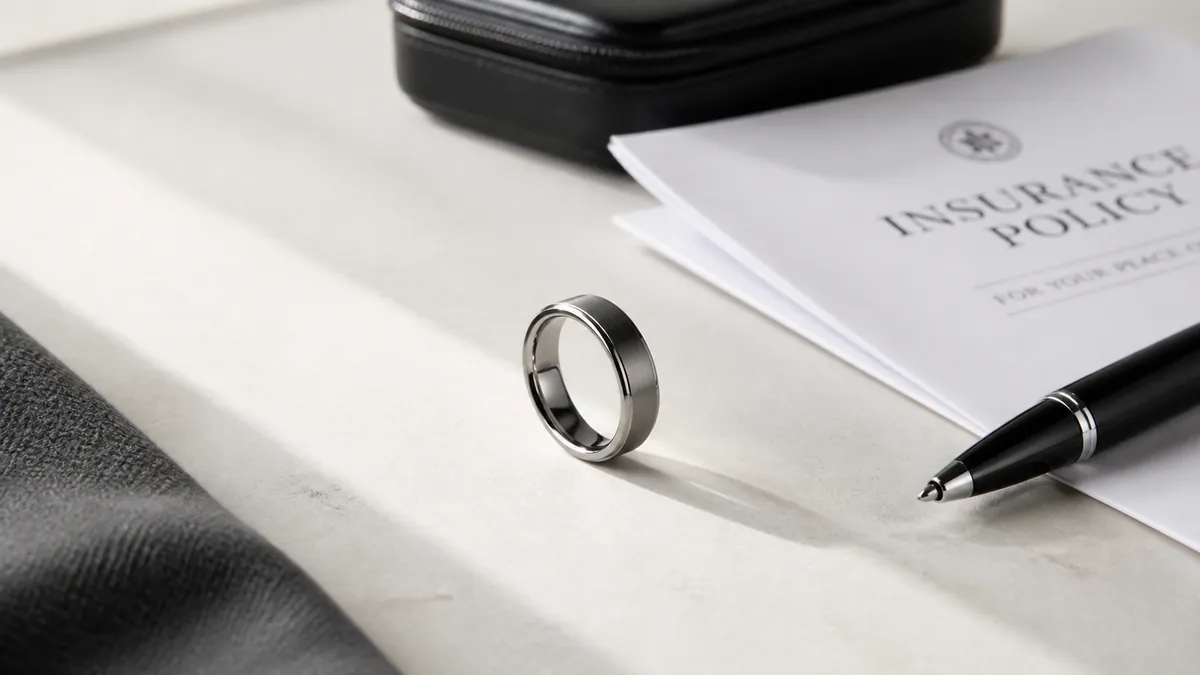
Second piece of advice that comes up again and again: photograph and document the ring once it arrives, and keep the receipt somewhere safe. Because meteorite and antler are natural materials rather than mass-produced parts, insurers sometimes ask for more detail than they would for a plain metal band, and having clear photos plus the original invoice makes that process painless if you ever need to claim.
Finally, don’t be afraid to ask for a sample chip of the actual meteorite slice going into your ring before it’s set, particularly for a fully custom order through the custom titanium rings range. Every piece of Gibeon meteorite etches slightly differently, so seeing your specific slice before it’s locked into the band means no surprises on the day you pick it up.
Frequently Asked Questions
What is the best meteorite inlay wedding ring nz?
The best option depends on how hard you are on your hands day to day. A titanium band with a sealed Gibeon meteorite channel suits most grooms, while a black zirconium base gives more contrast against the etched pattern. If you work outdoors or with tools, a tungsten or ceramic base with a smaller inlay window will hold up better than a full-wrap design.
Which Meteorite Inlay Ring Is Right for Me?
Think about your daily routine before your Pinterest board. If you’re regularly in water or doing manual work, choose a narrower inlay strip or save the meteorite ring for occasions and wear a plain band day to day. Grooms drawn to hunting or the outdoors often prefer a meteorite and antler split design, while those wanting a cleaner look tend to pick a single meteorite channel with no extras.
What to Look for When Buying This Ring
Confirm the meteorite is genuine Gibeon meteorite with proof of authenticity, and ask exactly how the inlay is sealed against moisture. Check whether resizing is possible on your chosen design before you order, since inlay channels are cut to size, and get a written warranty that covers the inlay separately from the metal band.
Are Budget-Friendly Options Available?
Yes. A single narrow meteorite or antler channel on a titanium base costs considerably less than a full-wrap inlay or a split meteorite-and-antler design, since less inlay material and cutting time is involved. Some grooms also keep costs down by pairing a plain everyday band, such as one from the ceramic mens rings range, with a smaller meteorite piece reserved for special occasions.