

I have bought from this company a fee times and they just make it easy to purchase online. Thank you for your quick customer service and quality products you provide.
Lifetime Warranty for Titanium and Tungsten Rings.

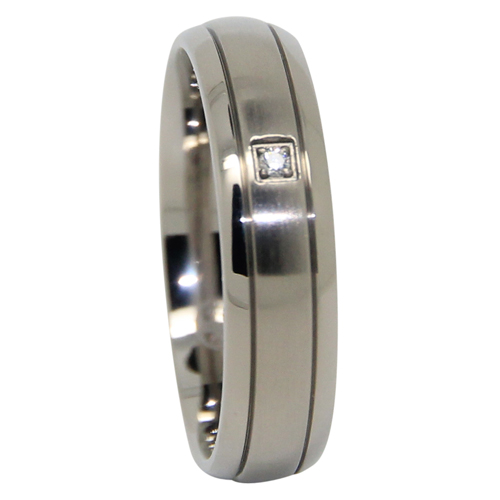

Titanium is the no-drama choice for the working bloke. Light as anything, hard as nails (relatively speaking), and it won't tarnish or corrode no matter the conditions. If you're outdoors a lot — fishing, farming, construction, or just rugby and gym — titanium handles all of it without complaint. Hypoallergenic finish means no skin reactions, even after sweaty days. Comfortable interior fit makes it easy to wear all day. About as practical as a wedding ring gets.
Average 5.0 / 5 across 3 verified reviews.
I have bought from this company a fee times and they just make it easy to purchase online. Thank you for your quick customer service and quality products you provide.
Thx so much. Looks great and fits well.
Bon, Adding an Interest List does show you all of the posts from the pages that you have added to the list. We have done some of our own testing, and we are senieg posts using an Interest List that were not showing up on our Newsfeed. We, and hundreds (or thousands?) of Page Admins, have noticed a huge drop in reach to our fans. This has only happened in the last few months, and Facebook does acknowledge that they have changed the EdgeRank algorithm, regardless of their motives. We are providing this information so that users don't miss out on the content that they want to see. Facebook appears to be planning some further changes in response to user feedback . Please see .Ipswich Library
Diamonds are the hardest natural material on earth, but the metal claws, channels or bezels holding them in place are not — that's where care matters most. Clean diamond-set rings every couple of weeks by soaking in warm water with a drop of dish soap, brushing gently behind the stones with a soft toothbrush (skin oil and soap residue build up there and dull the sparkle), and rinsing well. Pat dry with a lint-free cloth.
Take the ring off for gardening, weightlifting and heavy DIY — a knock against concrete or steel can chip a diamond corner or bend a claw. Once a year, get any NZ jeweller to check the settings for free; catching a loose claw early is the difference between a quick re-tip and losing the stone. Avoid wearing it in chlorinated pools and spas if the band is white gold, since chlorine attacks the alloy that holds the stones.
It's uncommon but possible — usually after a hard knock bends a claw, or after years of wear gradually wears the metal down. Annual claw checks at any NZ jeweller (free service) catch the problem before the stone is lost. Channel-set and flush-set diamonds are more secure than claw-set for active wear.
Soak the ring for 15 minutes in warm water with a drop of dish soap, then brush gently behind and around the stones with a soft toothbrush. Rinse and pat dry with a lint-free cloth. Avoid bleach, chlorine and abrasive cleaners — these attack the metal setting, not the stone.
Chemically and visually identical — same hardness, same sparkle, same care requirements. Lab-grown stones cost roughly 60–70% less than natural in NZ, which is why most diamond-set men's rings under $3,000 NZD now use them. Both are graded on the same 4Cs scale.
Yes — most NZ home-and-contents policies cover jewellery up to a sub-limit (usually $2,000–$5,000) and let you add named items above that. Keep your purchase invoice and any independent valuation; insurers ask for both at claim time.
Most diamond-set men's rings are bought as wedding bands — browse the full range of mens wedding rings to see diamond-set options alongside plain bands in tungsten, titanium, gold and platinum. Adding even a single small flush-set diamond lifts a plain band into the wedding-ring category without the maintenance load of a fully pavé setting.
Every ring in our range is built to outlast the work it’s worn through. Here’s what comes with yours, and how we back it.
Not the right size or finish? Swap it within 60 days. Fee-free on in-stock rings $100 or more ($10 under $100). Return postage is yours — tracked is safest.
Real heft in the hand. Nothing hollow, no plating to wear through. Same metal day one, day ten thousand.
If the metal cracks or breaks during everyday wear, we replace the ring. Plating and inlays wear naturally and aren't covered.
Dispatch
In-stock orders are usually dispatched within 1–2 business days (Monday to Friday) from Brisbane, Australia; made-to-order rings show their lead time above. NZ-wide tracked courier on every order.
Best to nail the fit on the first ring. Three quick ways to get there — pick whichever suits you.
Wait — don't leave it behind
Finish up now and we'll knock a little more off what's already in your bag — just for coming back.
Apply my discount & check out → No thanks, I'll pay full priceExtra 10% applies to all rings. Precious-metal rings (gold, silver, platinum & diamond) get 5%. Applied automatically — one use.